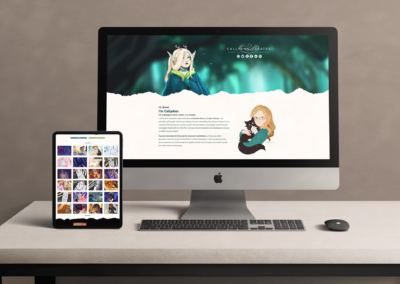
Loose Canon is a 75,000 word YA novel that I wrote, illustrated, and published for free online. I built its home website and produced a full-cast audio version of the novel. I created an extensive library of concept art and multimedia assets. What I couldn't do myself, I collaborated with other creatives to produce. I worked with editors, composers, artists, and a total of 34 voice talents from around the world. The story inspired creations even beyond what I made or commissioned; fans contributed gift art ranging from sketches to animations to 3D models to crochet dolls.
This was a formative passion project that honed my skills as both a content artist and as a creative director.
The Premise
At the heart of Loose Canon is the dynamic between its deuteragonists: Spark, a vivacious and recklessly cavalier superhero, and Vahaadi, a conniving djinni trickster who serves (with great chagrin) as her sidekick. These two characters were initially from very different stories. Spark is the brain child of my close friend, Evie Ng, who created Spark for a series of comic strips in our high school newspaper. Vahaadi was a villain from a high-fantasy novel I was developing about the same time. Loose Canon was born from the thought of throwing these two very different characters in a story together, and the delightful and chaotic adventure that would arise from Spark’s zealous attempts to recruit Vahaadi into her heroic exploits.
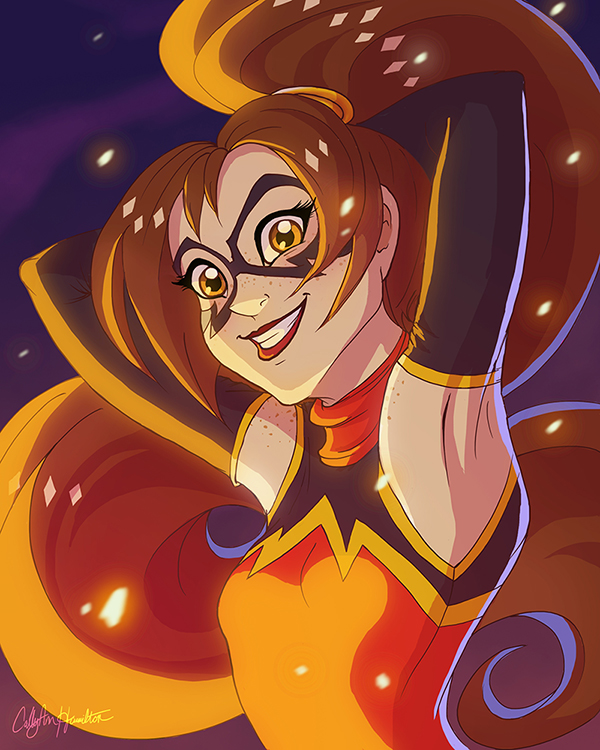
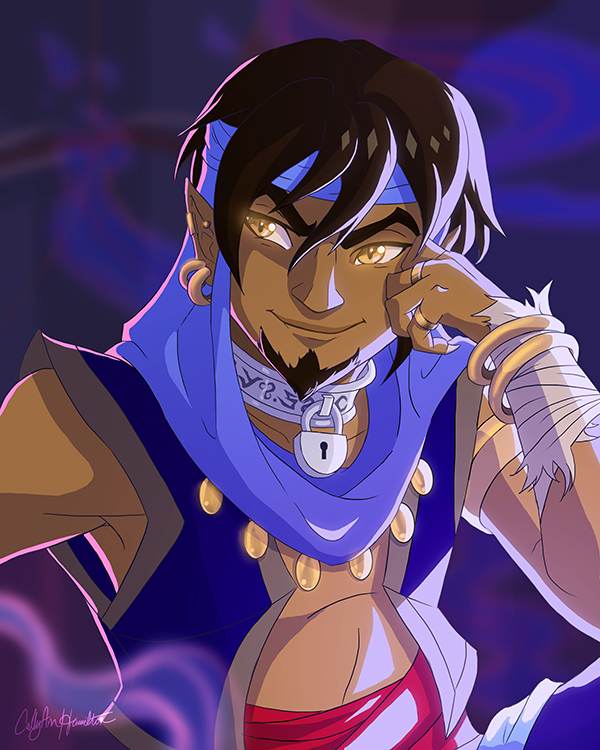
Spark and Vahaadi , the deuteragonists of Loose Canon.
Writing
My vision for Loose Canon was to emulate the energy and pacing of an animated television show. I studied screenwriting books (How to Write for Animation, by Jeffery Scott; Save the Cat, by Blake Snyder; and Directing the Story, by Francis Glebas, among others) and rewatched beloved cartoons and animes to take notes. I divided the novel into six "episodes": the first five episodes consist of three acts, and the special finale episode I wrote in four acts.
The narrative follows Spark and Vahaadi's misadventures as they tangle with the effects of supposedly "fictional" worlds colliding. In a "monster of the week" style format, each episode features the tropes of different genres bleeding together, which Spark and Vahaadi must race to combat.
I completed the bulk of the outlining and first draft as part of the National Novel Writing Month challenge in 2014 and spent the next three years refining with the critiques of alpha readers and beta readers. Don Miles, Kristina Kugler, and Jace Whatcott edited the final manuscript.
Character Design
Concurrent to the writing, I worked on visual designs for the characters. Spark and Vahaadi were mostly realized before this work began, but required adapting from their original contexts to the new story.
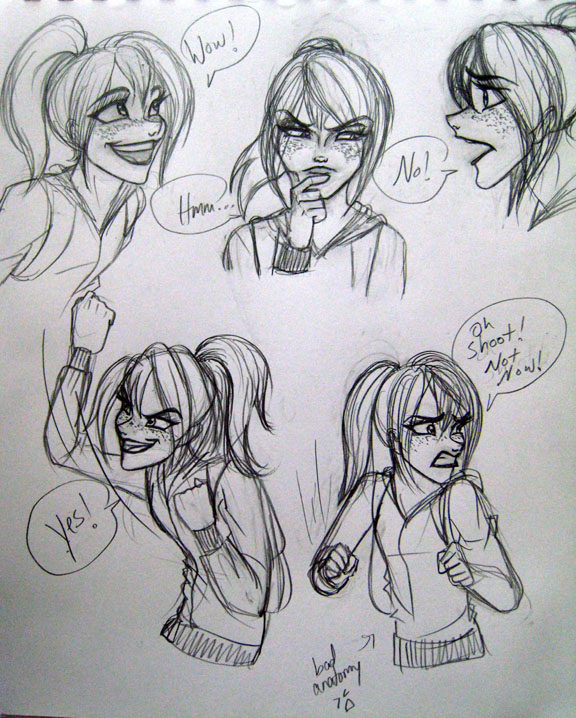
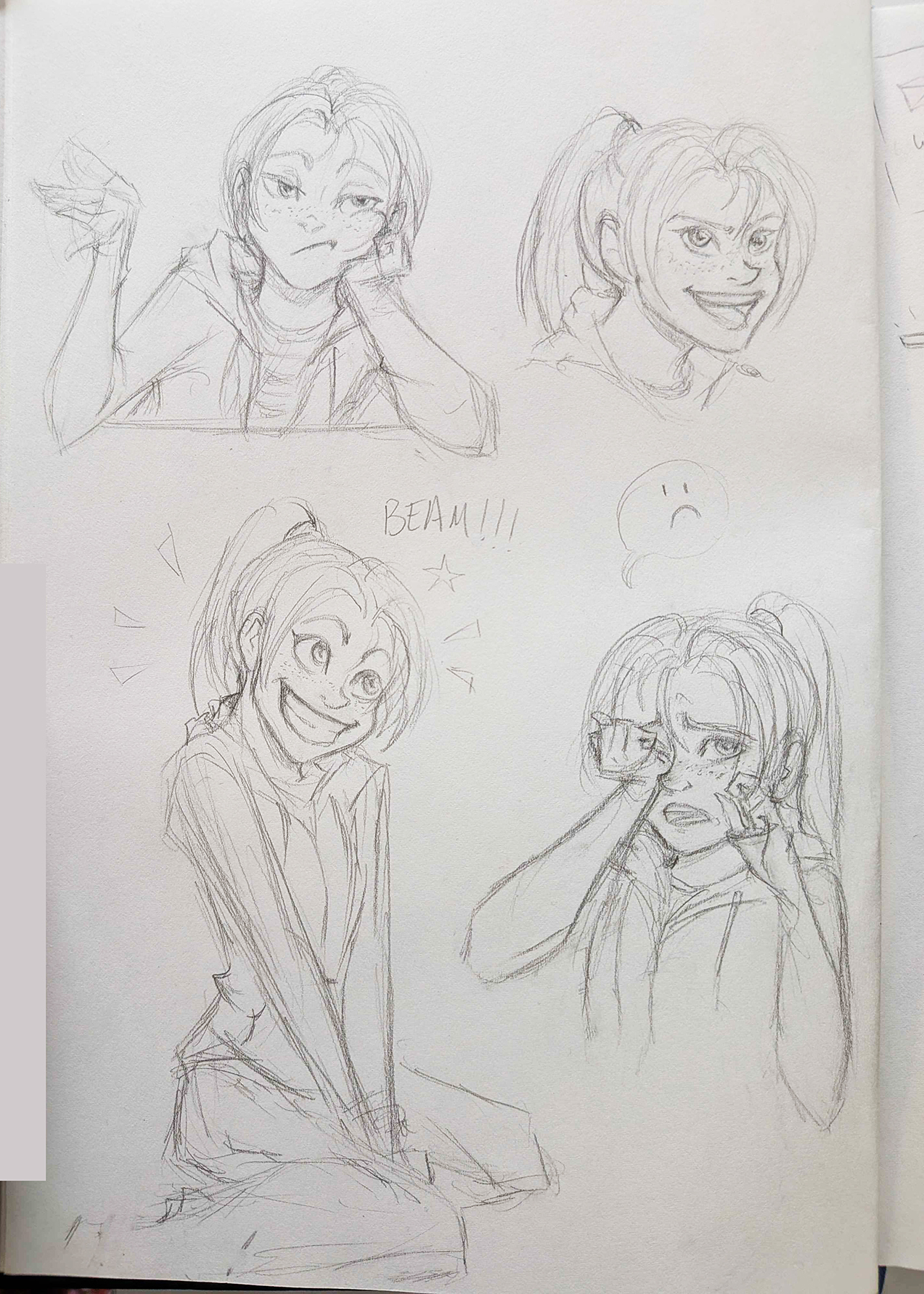
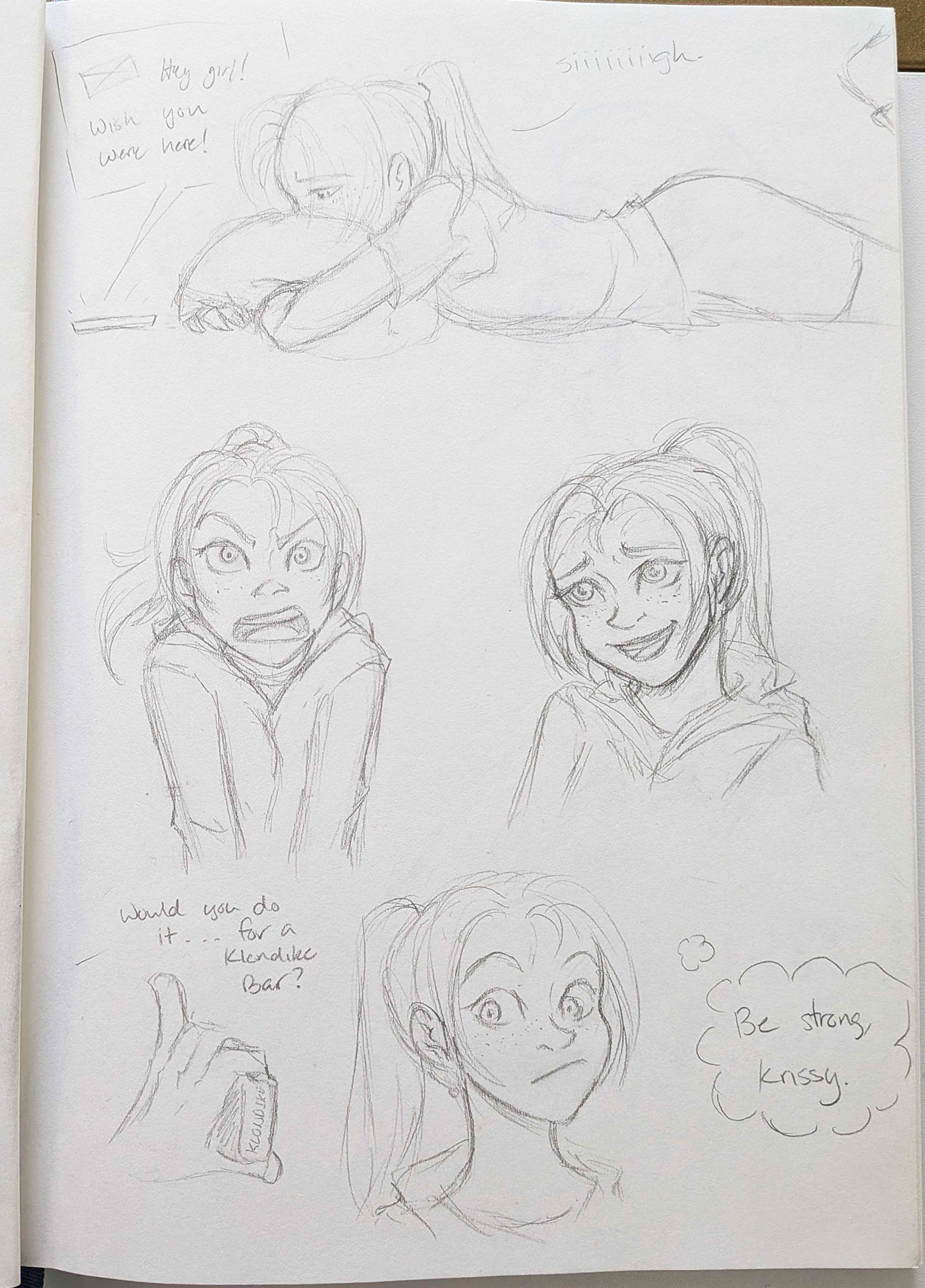
Evie and I worked together to figure out Spark's "civilian" identity, Krissy Cliffords. One: Krissy sketch page by Evie. Two and Three: sketch pages by me.
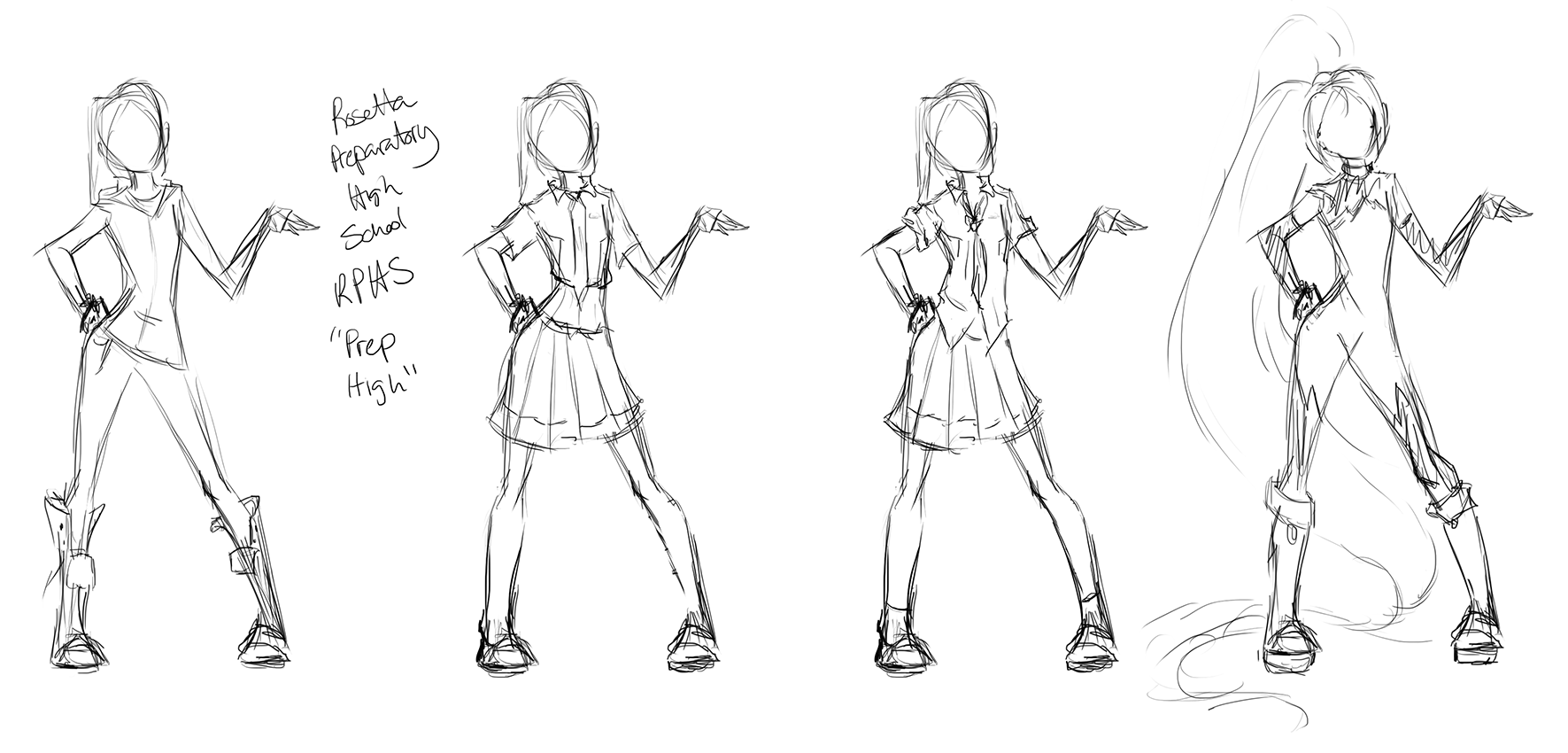
We liked the idea of sending Krissy to a fussy private high school with a school uniform, which Krissy would wear quite sloppily. I did these rough sketches to feel out her look across her casual outfit, school uniform, and superhero persona.
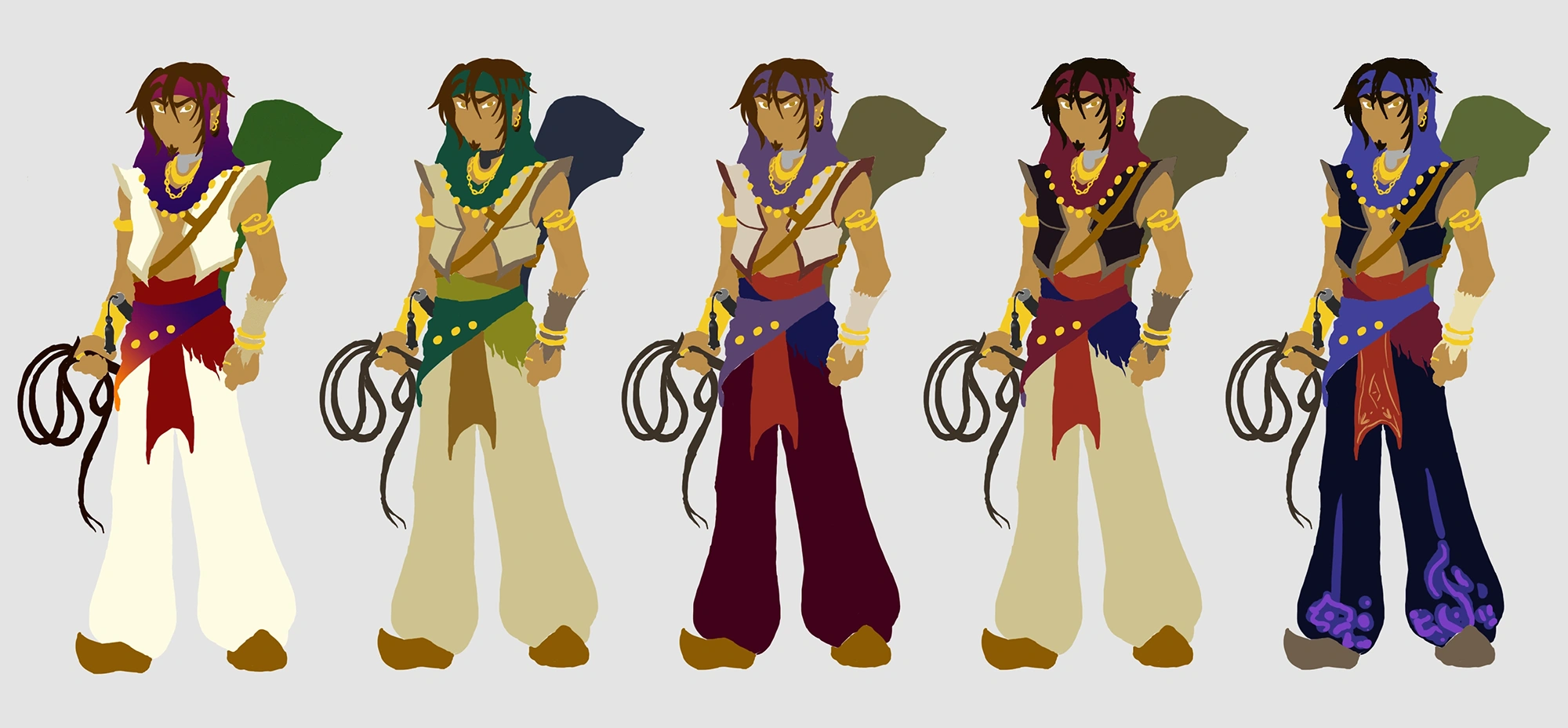
I went through multiple iterations to find a color scheme I liked for Vahaadi's outfit. I ultimately landed on the blue design; a calm, smoky, mystical scheme to contrast with Spark's bold reds, yellows, and blacks.
I designed supporting characters as they emerged in the manuscript. Early on, I saw the possibility of building references to different types of media into the "loretreader" characters to represent the genre of story they originated from. Spark's bold colors and sharp edges are reminiscent of the action bubbles of comic books. Vahaadi's tapered curves and rolled up carpet call to mind a scroll of calligraphy. With this in mind, I designed Elweyn, a wise owl-cat who serves as a mentor to Spark, to resemble a gilt-edged tome.
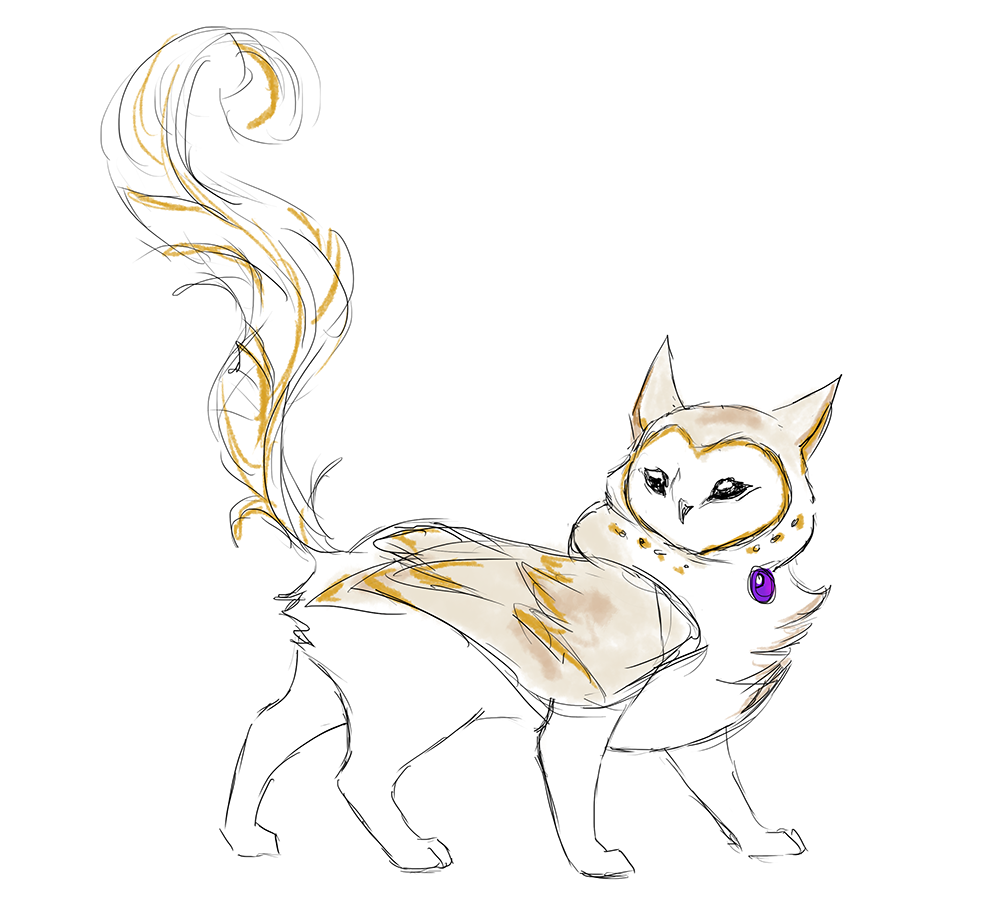
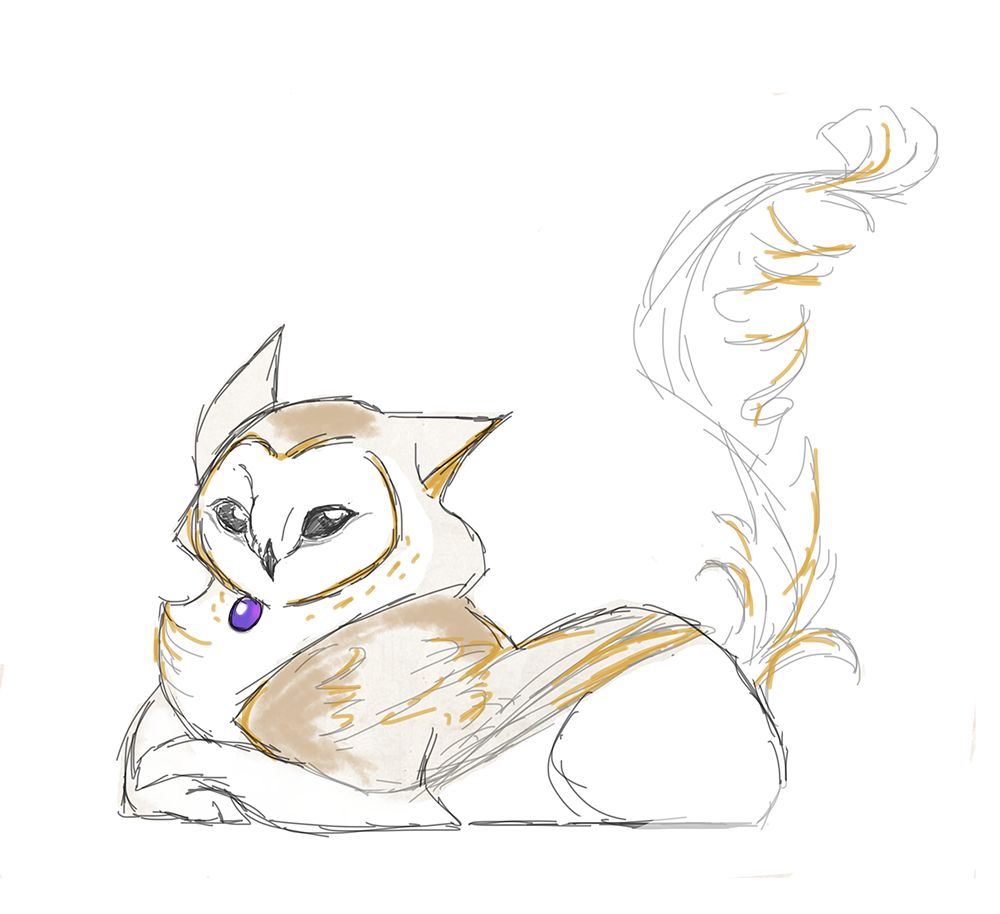
I envisioned Elweyn as a balancing factor to Spark and Vahaadi, so in contrast to them, she's small, soft, and poised. The curve of her chest plumage is meant to resemble the curling corners of book pages. Her colors are reminiscent of aging paper, her feathers are edged with gold, and her tail resembles a luxurious feather quill.
The idea of visually associating characters with objects thematically related to them expanded to include more than just media. Mr. Sabo is a scheming provocateur. His cartoonishly villainous design is inspired by gambling and games of skill. He has the shapes of each type of chess piece, all four classic card suits, and the pips of a 6-sided die distributed across his design.
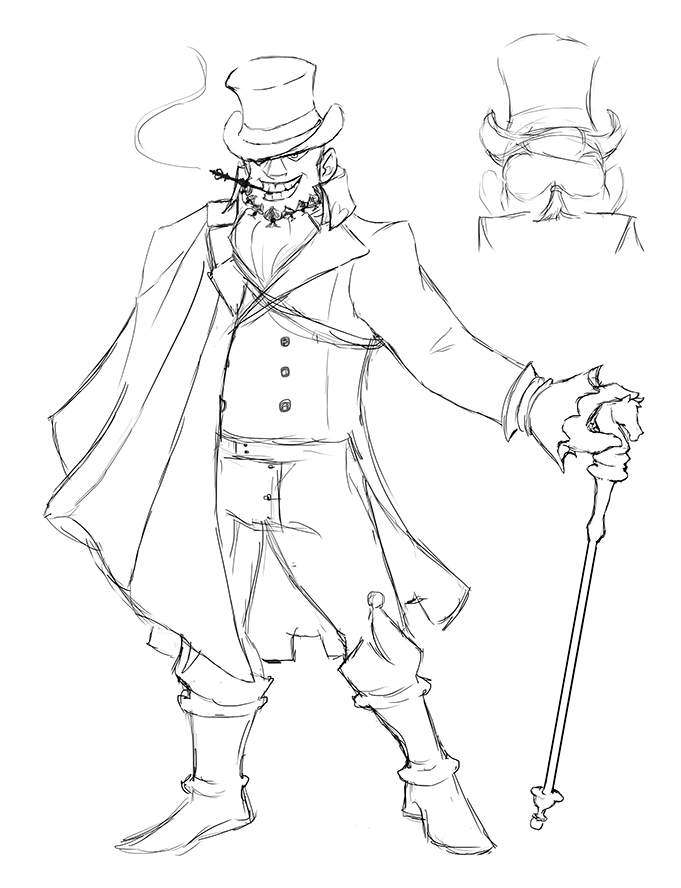
Mr. Sabo's design is full of references to game pieces. I focused on giving him a rectangular silhouette to represent a playing card.
A recurring element that emerged in the designs of the characters was a diamond motif. This started simply as a love for harlequin patterns, but I came to associate it with trickery and multifacetedness. In the context of the story, this motif represents mystery and secrets; the characters who have diamond elements in their design are dangerous, and not who they seem.
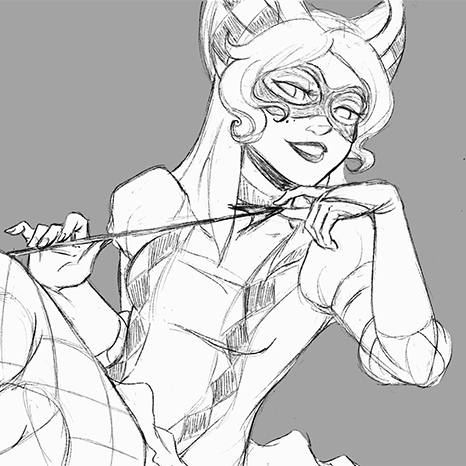
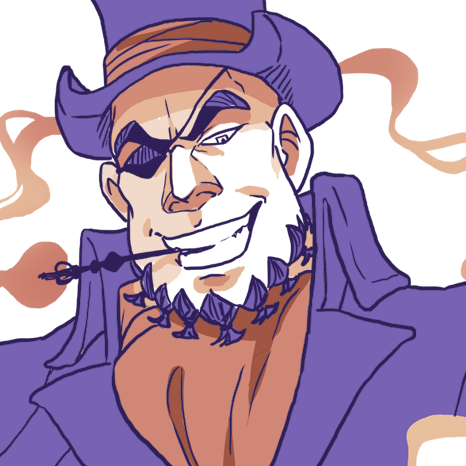
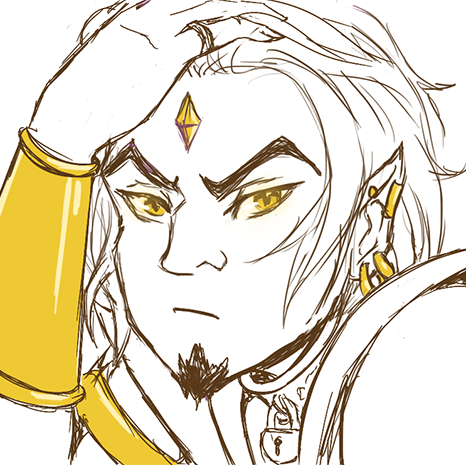
Serenade, whose antagonistic ambitions are a central mystery of the story, has diamonds all over her design. Mr. Sabo has a diamond-shaped eyepatch (art by Amy King). Vahaadi's design is even more subtle; he has a diamond-shaped jewel embedded in his forehead, hidden under his hair.
Overall, I created hundreds of concept sketches. This lineup shows only some of the Loose Canon cast.
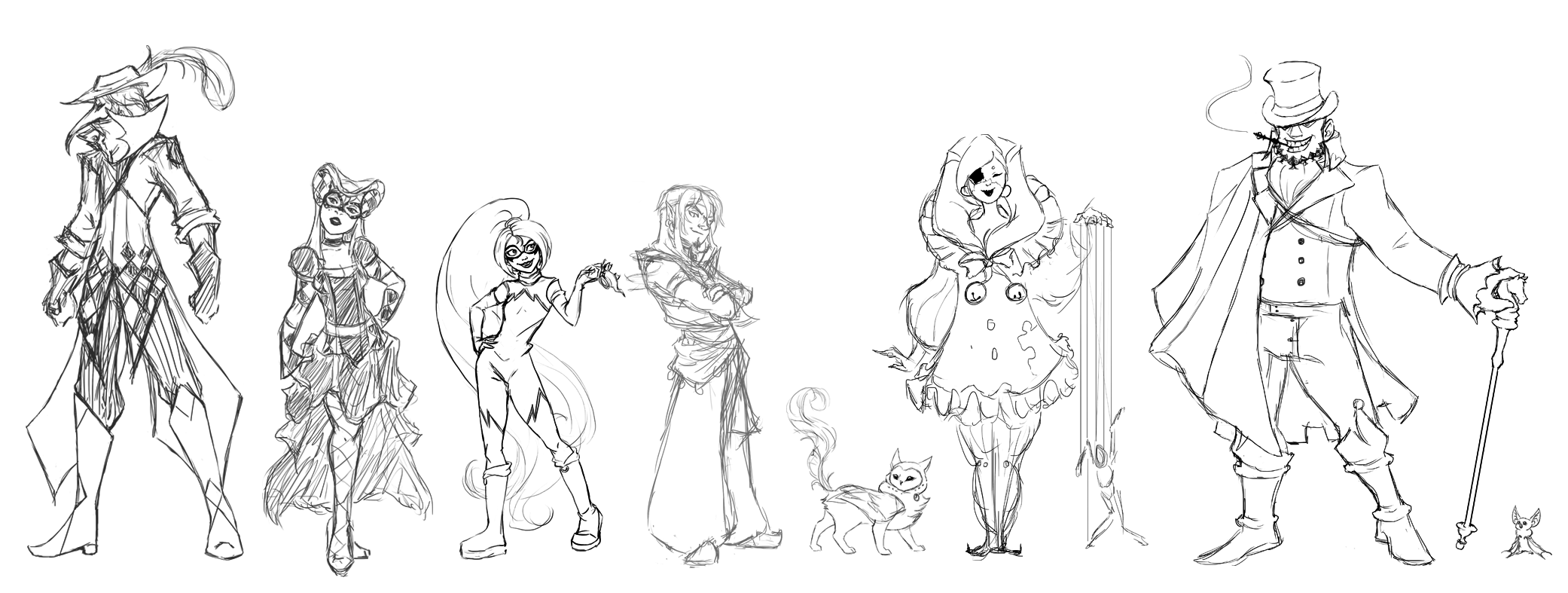
This lineup includes character concepts I eventually cut.
Illustration Style
As development of Loose Canon progressed, I wanted to establish a consistent art style for the illustrations that would appear in the published novel.
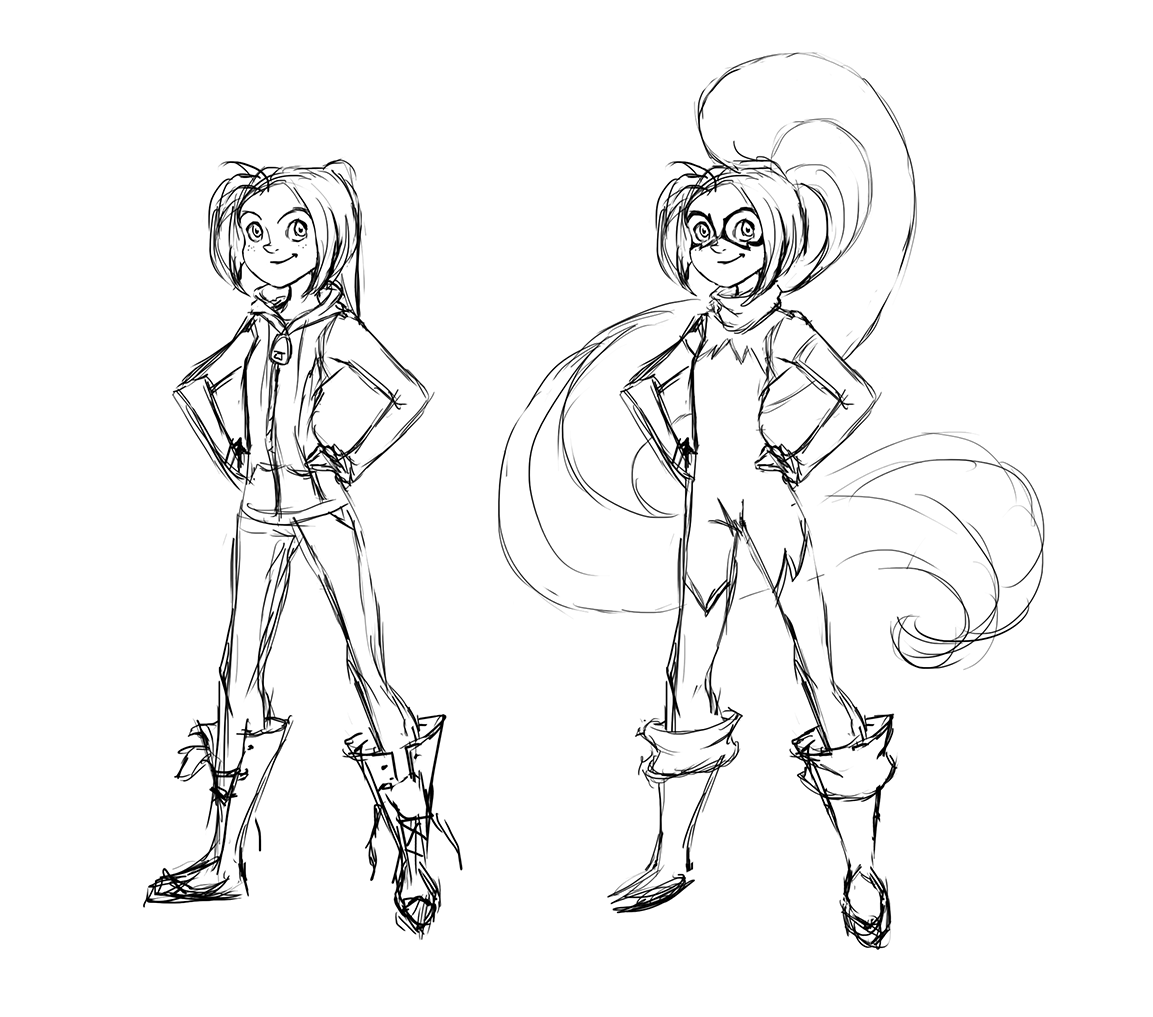
I briefly tested a more cartoony version of my typical style with even more exaggerated shapes and simpler features.
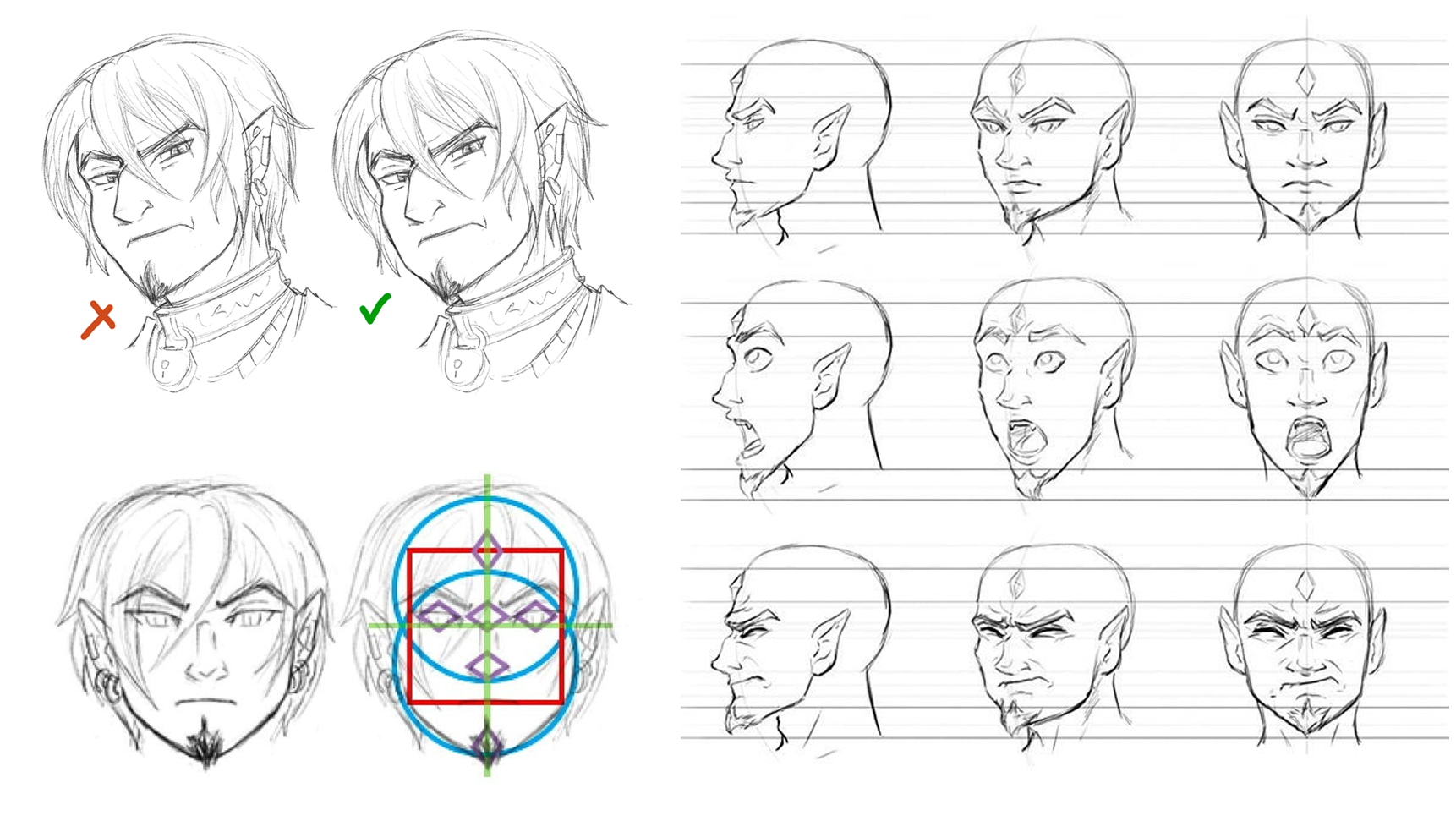
Studies of the shapes and proportions of Vahaadi's face. I omitted his hair in the turnaround study to focus on how his features would move at their most extreme expressions.
In addition to committing to the proportions I would use, I needed to settle the rendering style. I used illustrations of Vahaadi to test three different styles: lineless, painterly, and what I called an anime style, which I defined by crisp-edged shadows and thin black lineart. I loved the look of both the lineless and painterly styles, but decided to pursue the anime style because it was faster to produce consistently.
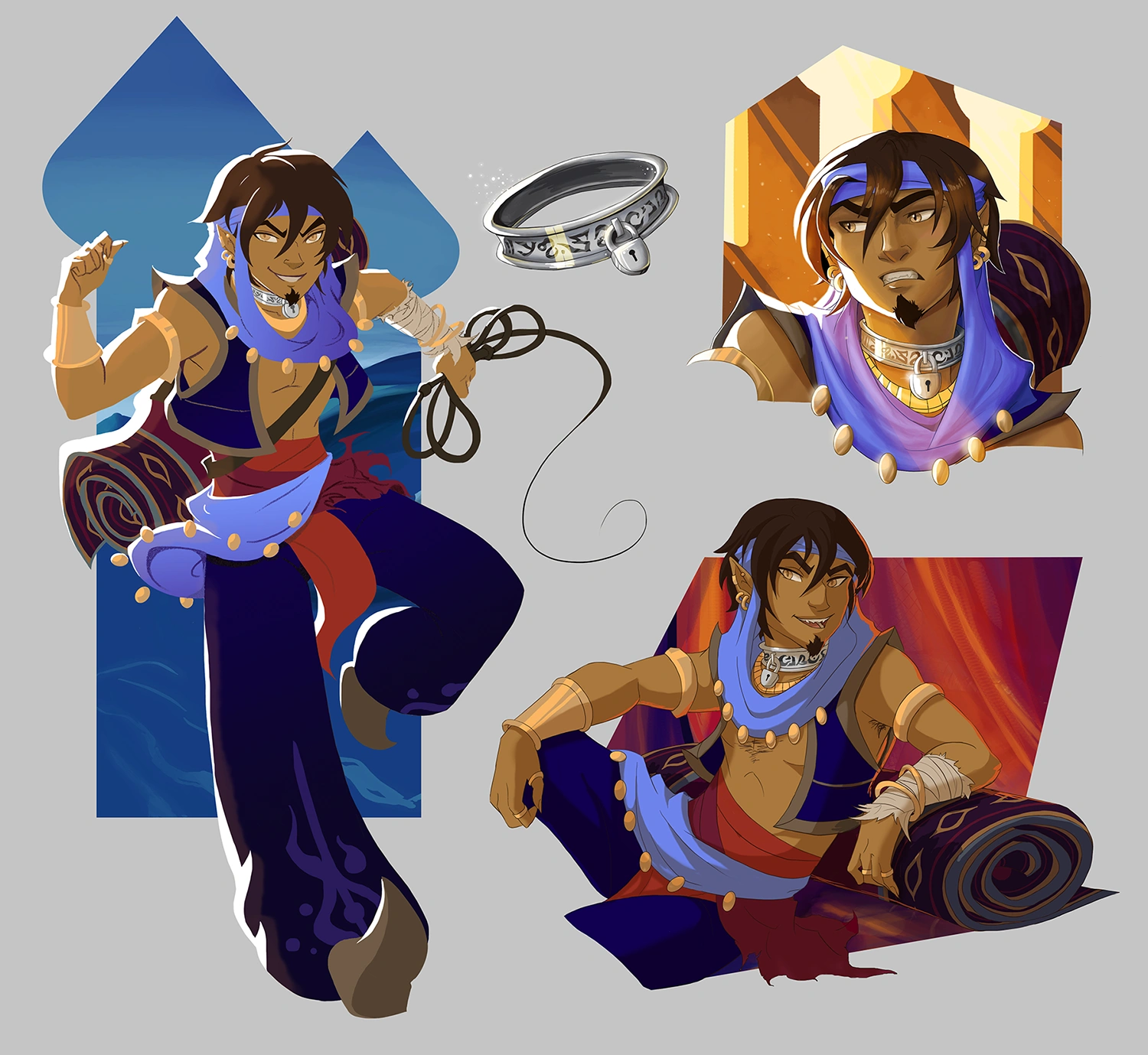
A rendering style test for three different looks: lineless, painterly, and anime-inspired.
I was inspired to extend the motif I'd established in the character designs into a lighting effect in my illustrations. Instead of rendering the highlights in characters' hair as subtle streaks as I would normally, I painted them in as hard-edged diamond shapes.
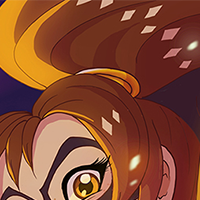
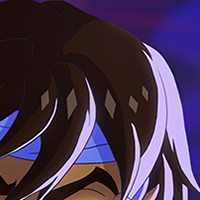
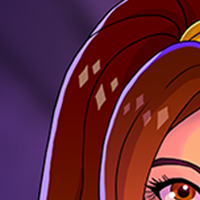
Diamond-shaped highlights in the characters' hair.
Art Production
I created a full-color illustration for each episode, as well as a few bonus illustrations for particularly vivid scenes. I drew these scenes in Procreate and painted them in Photoshop.
Final Renders
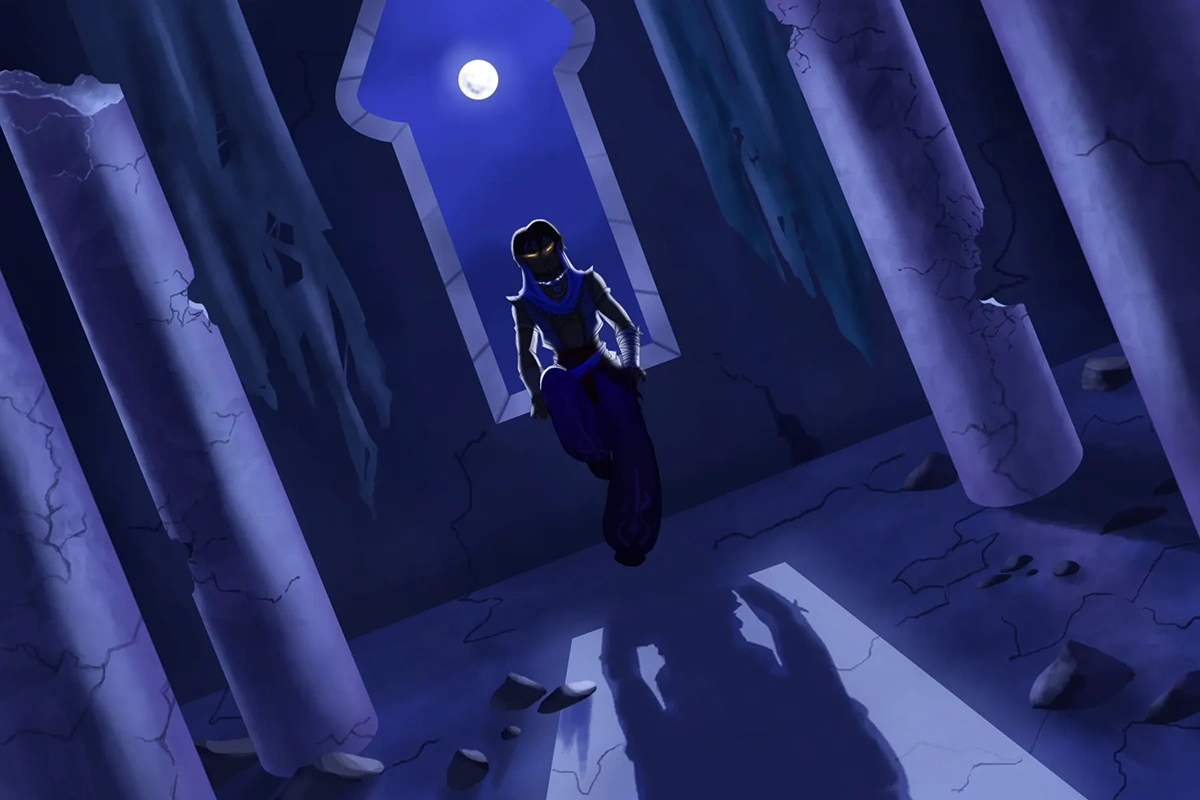
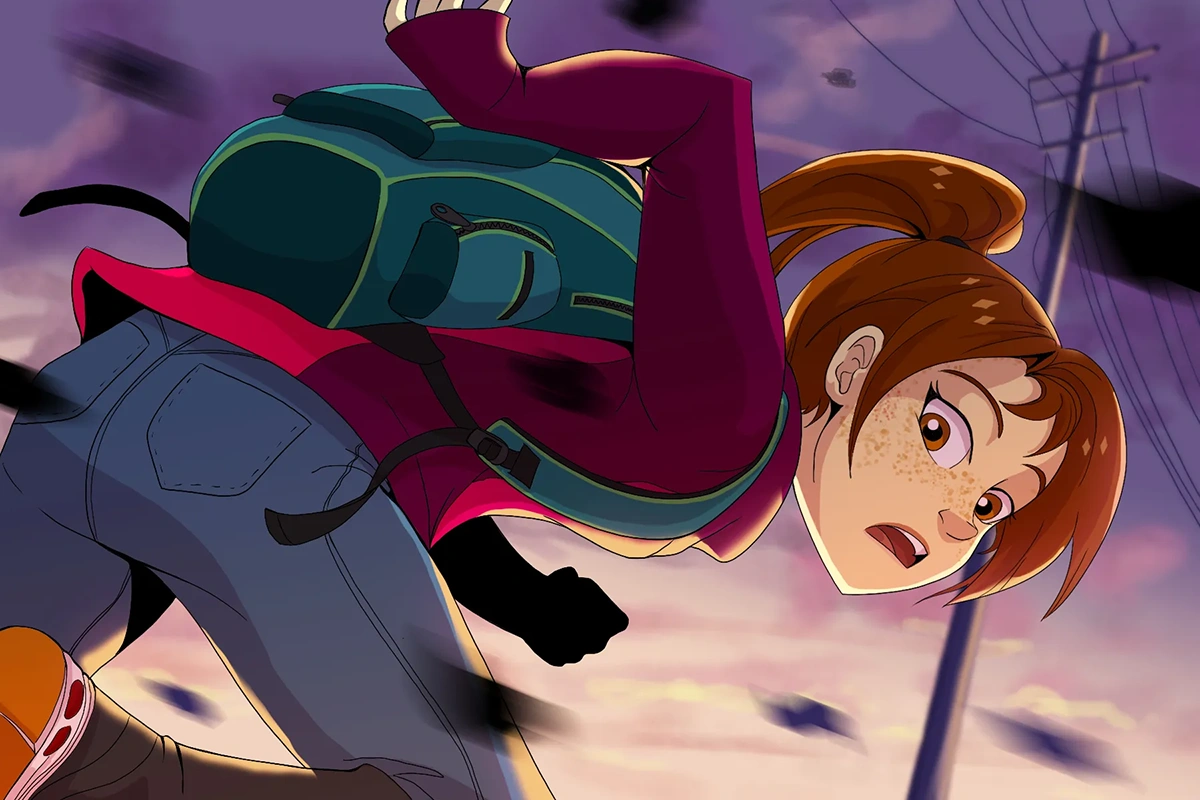
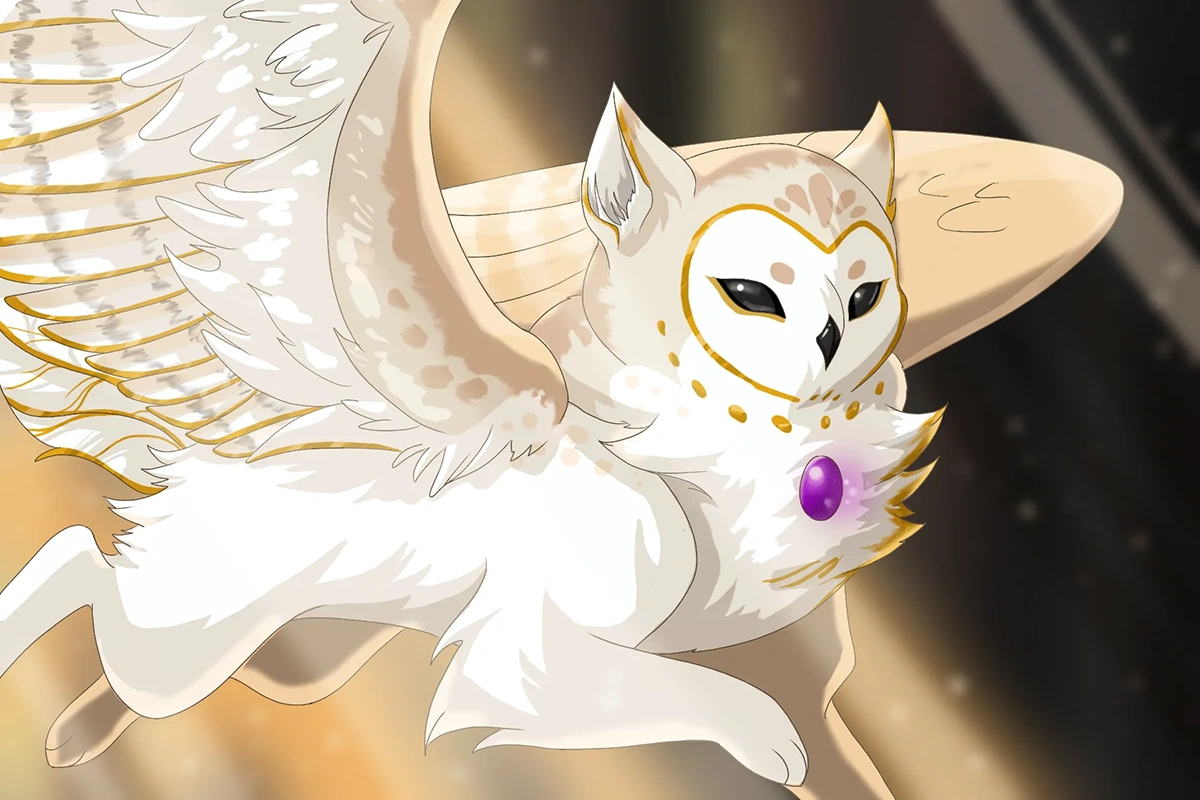
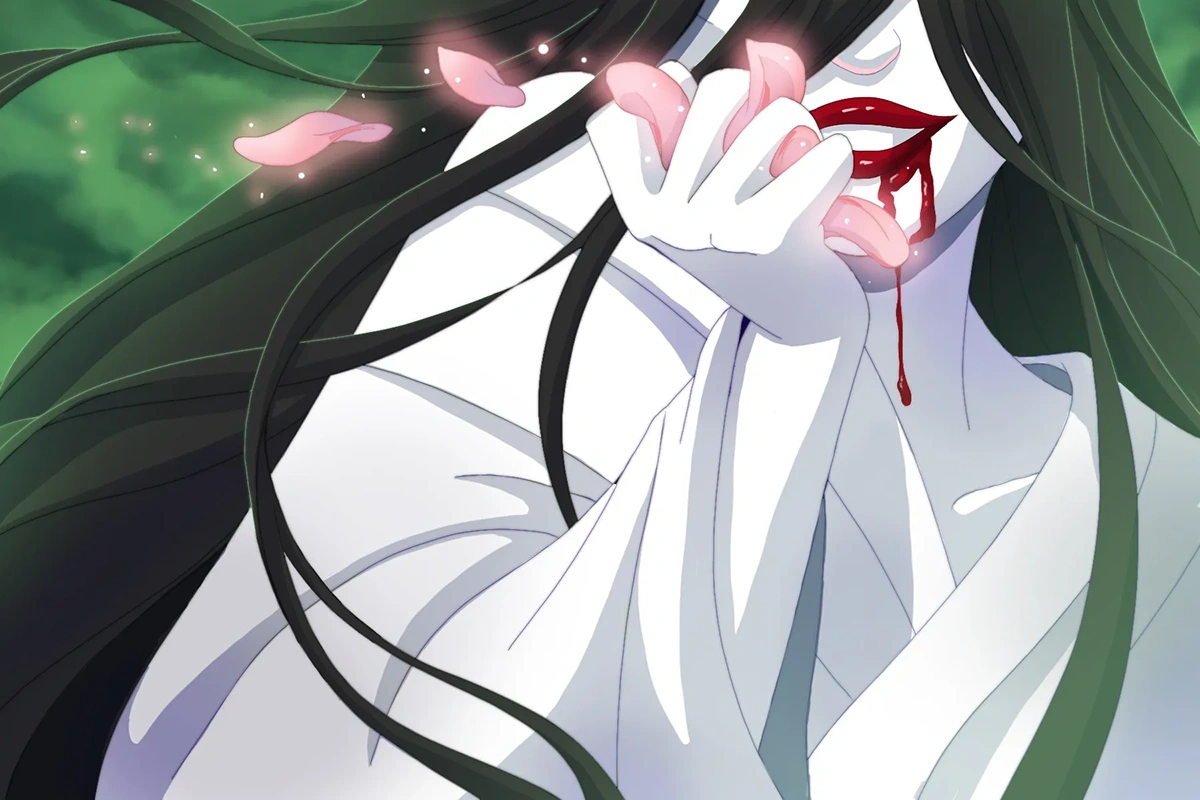
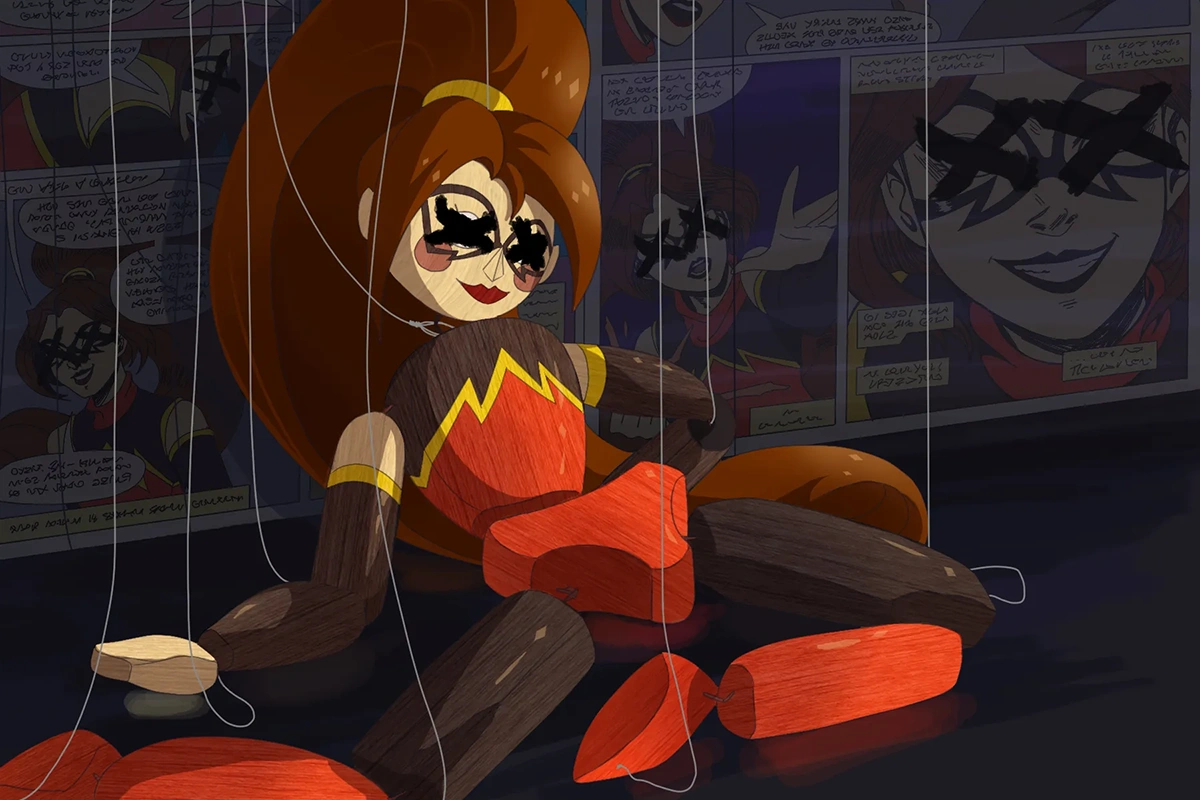
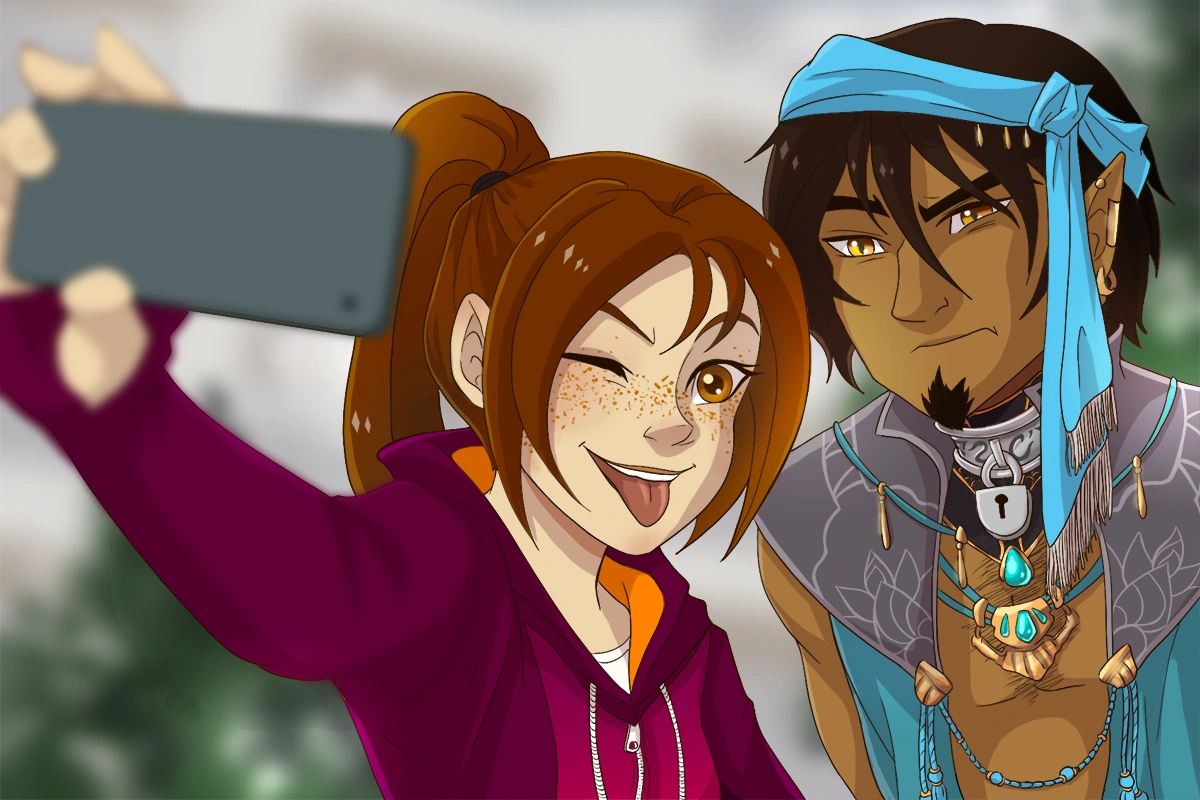
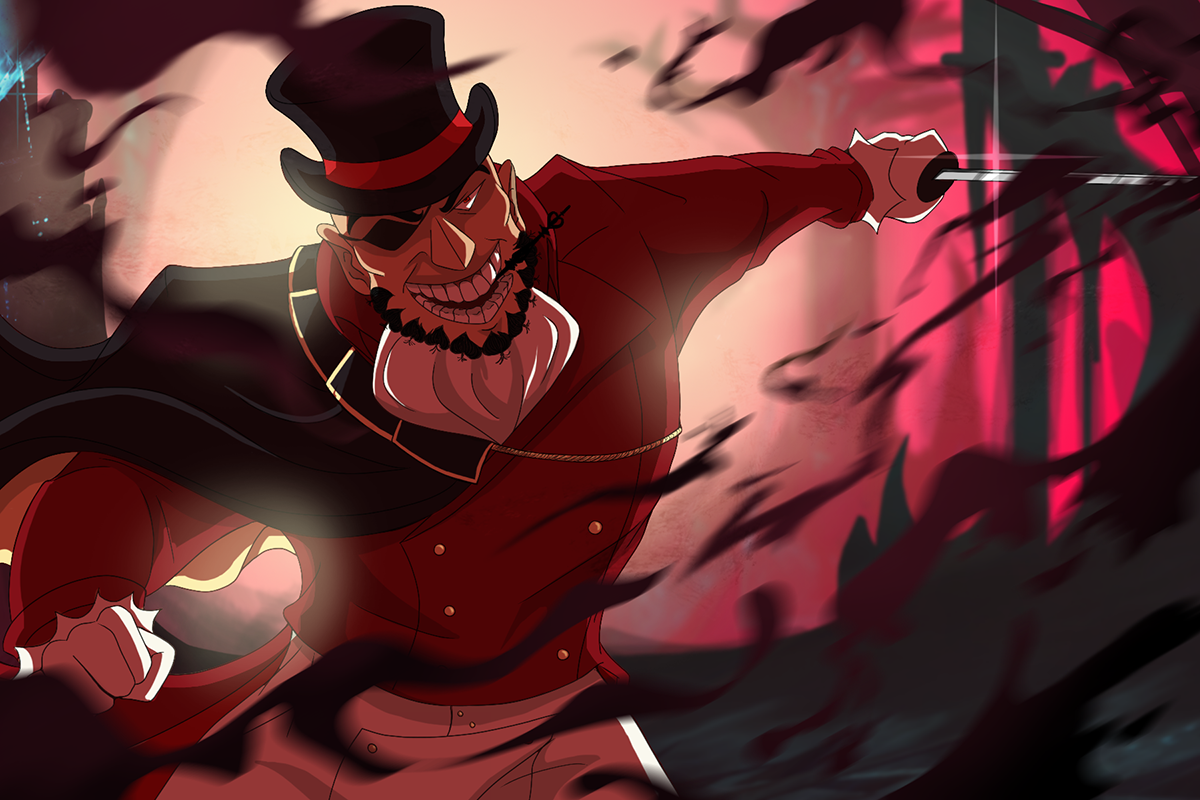
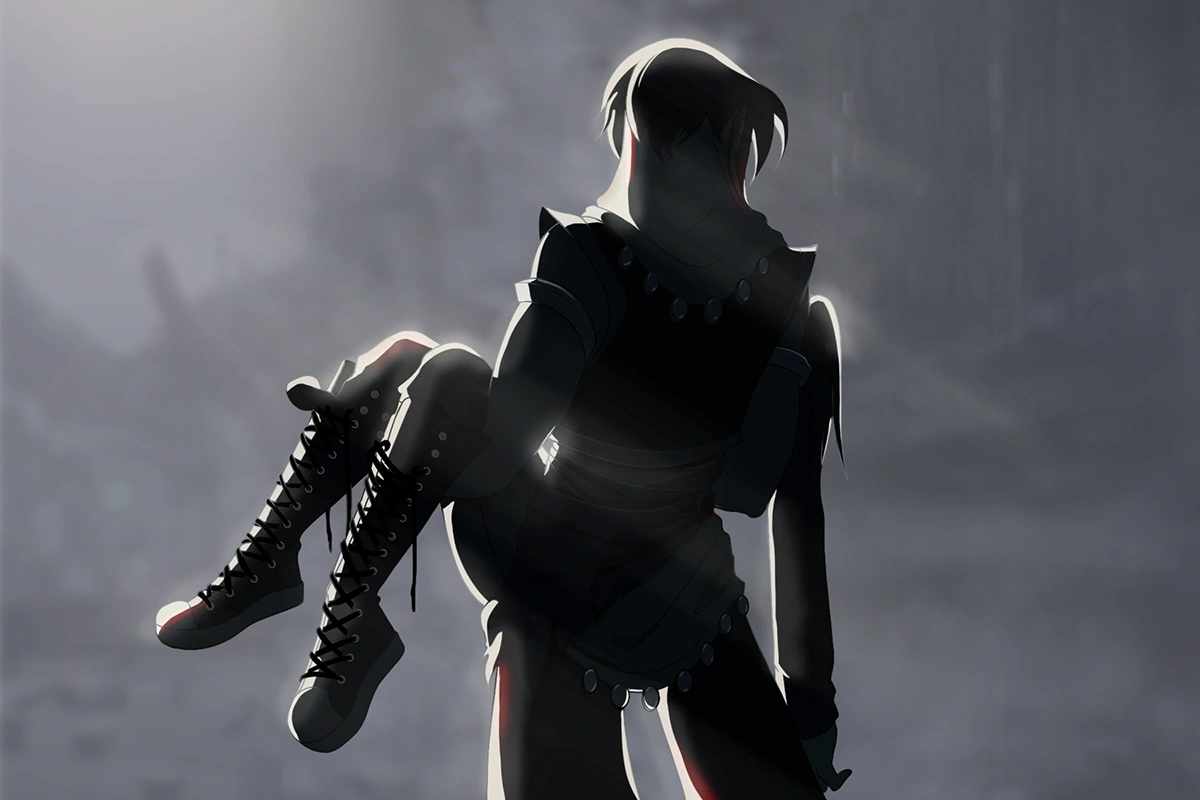
Sketch vs Final Render
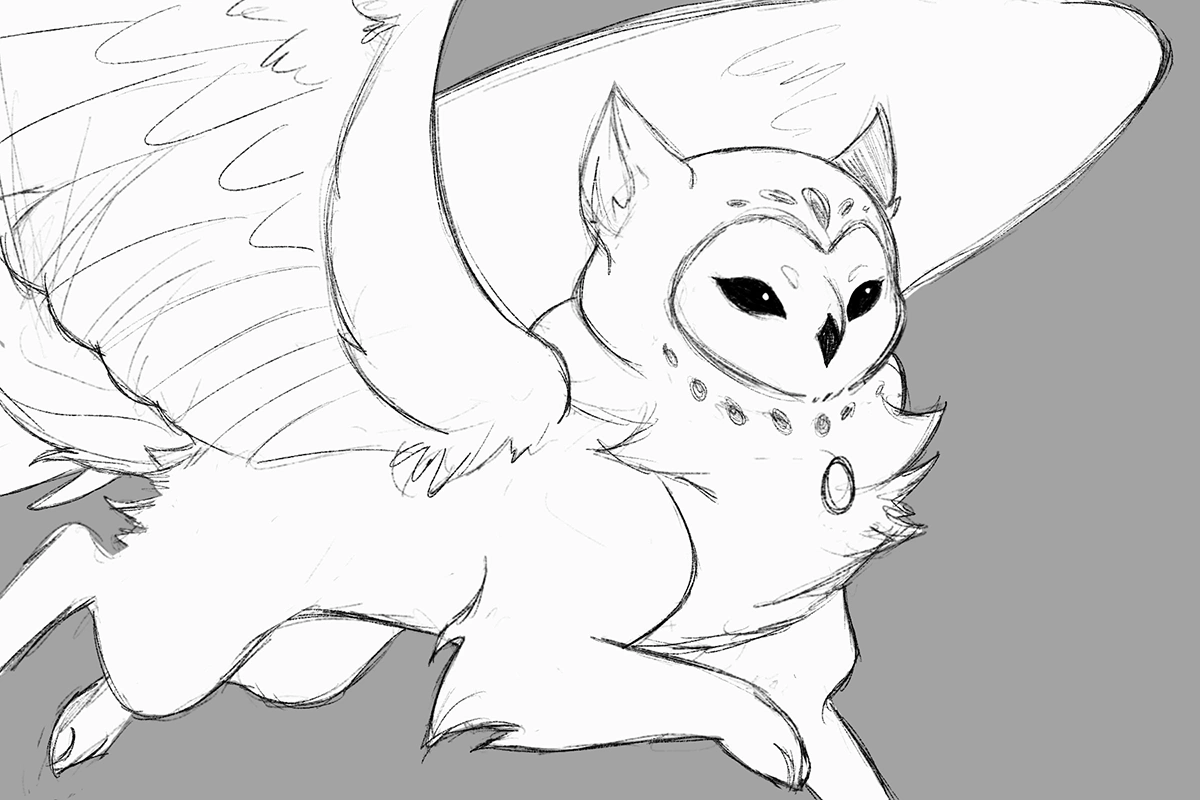
A comparison between the clean sketch vs final render of the Episode 2 illustration featuring Elweyn.
Additional Sketches
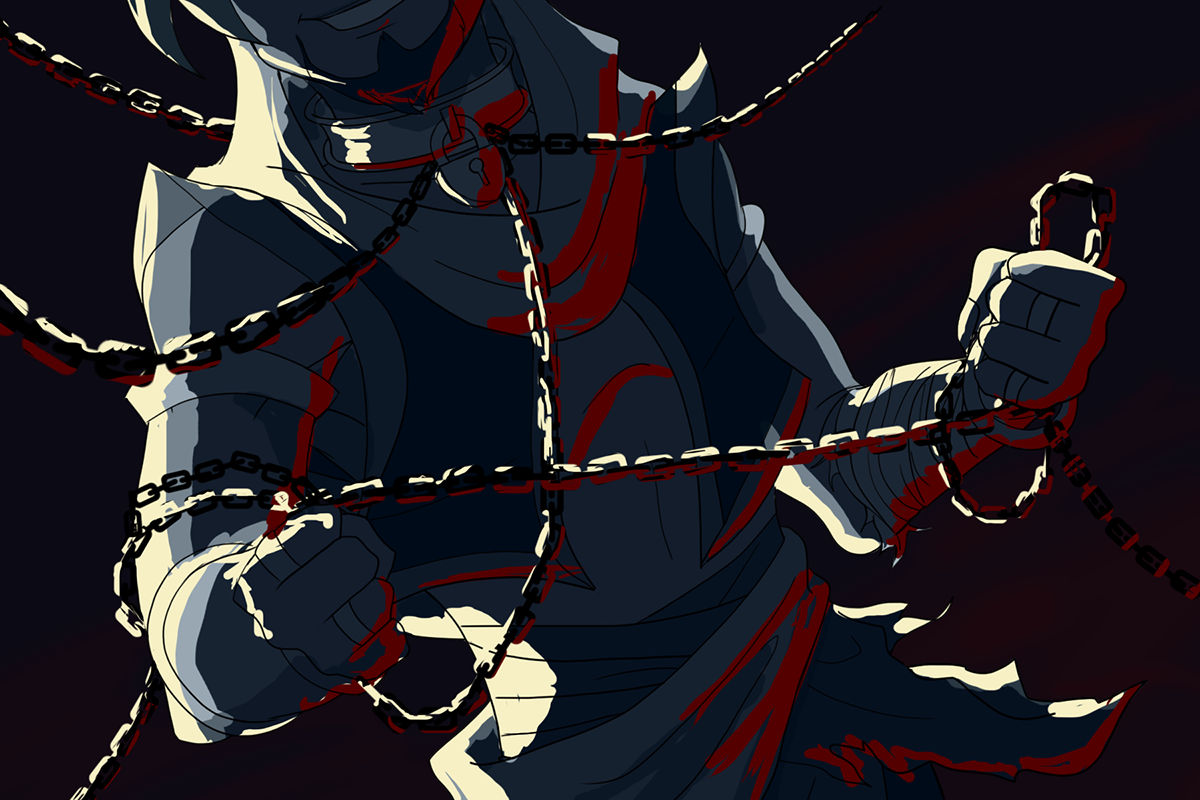
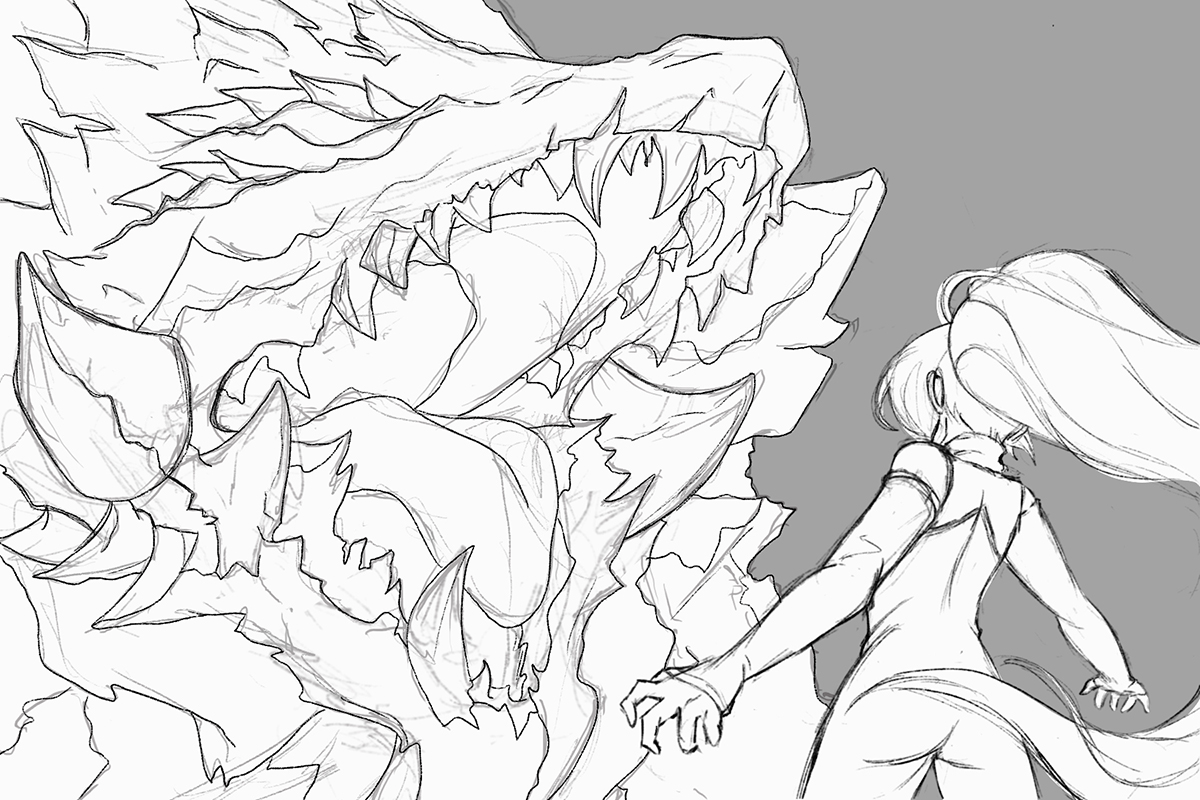
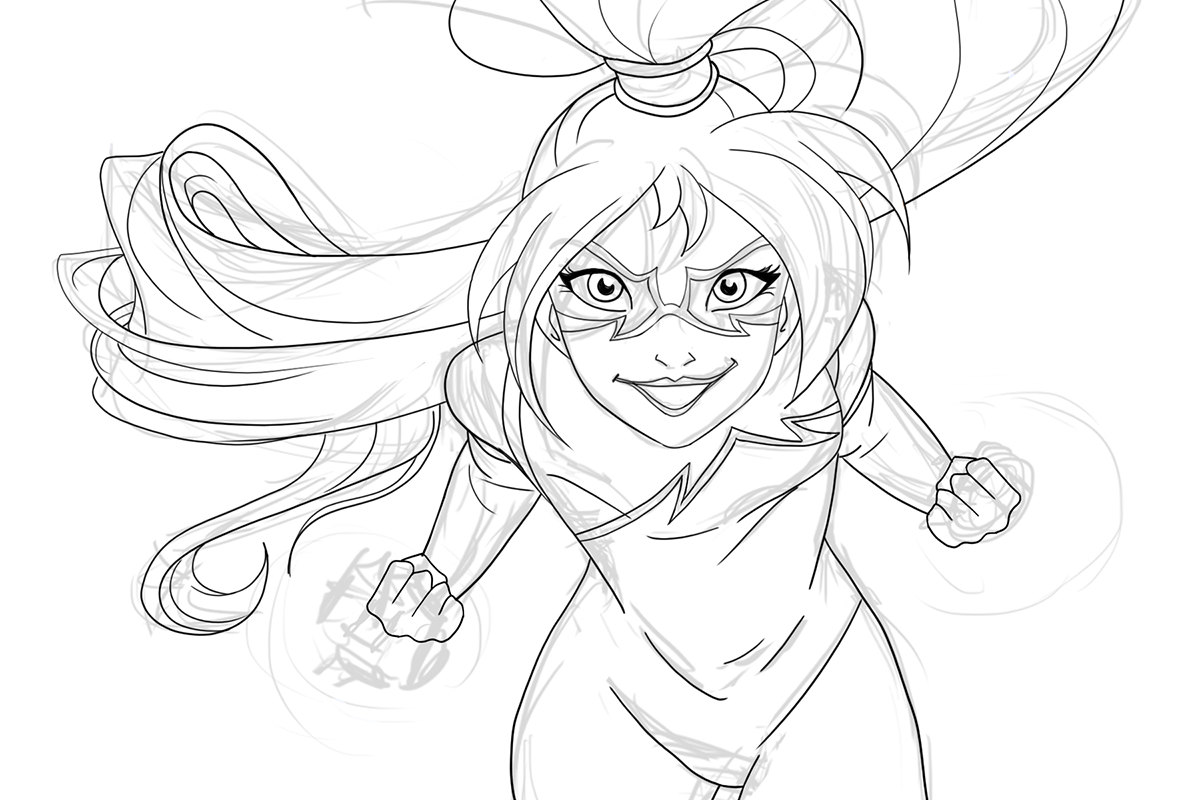
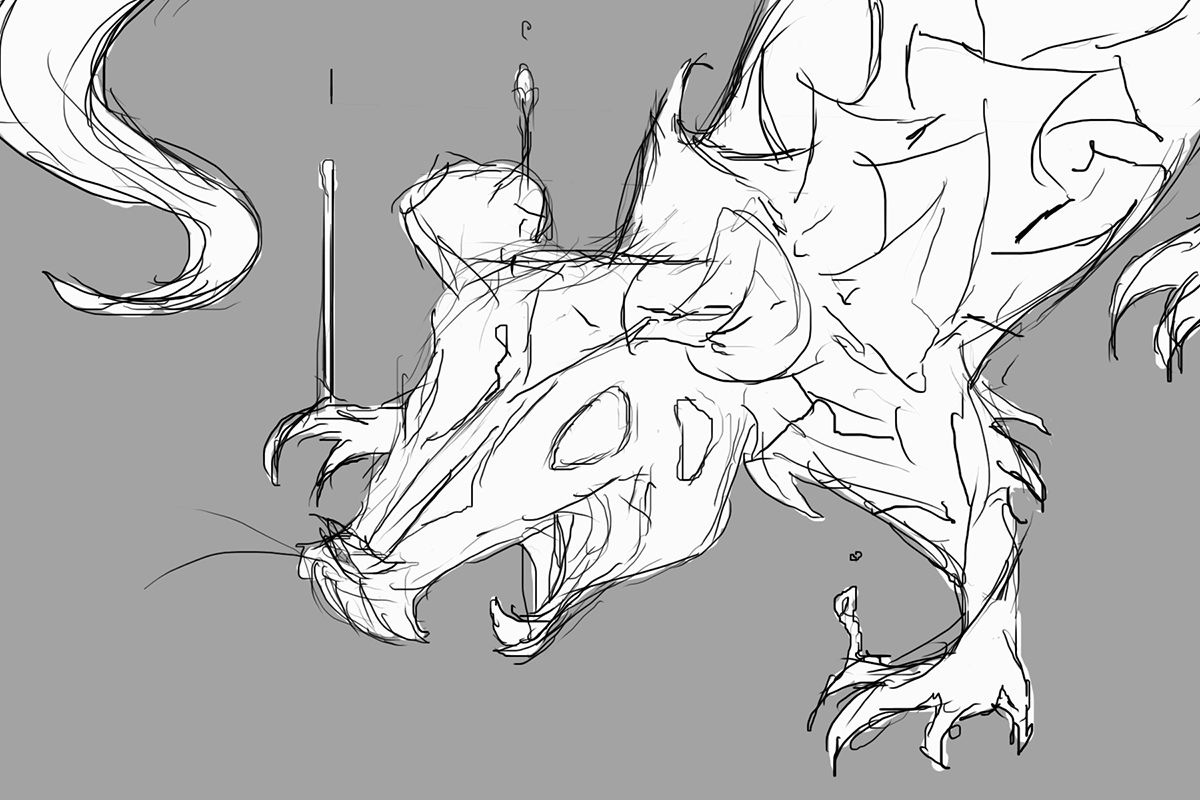
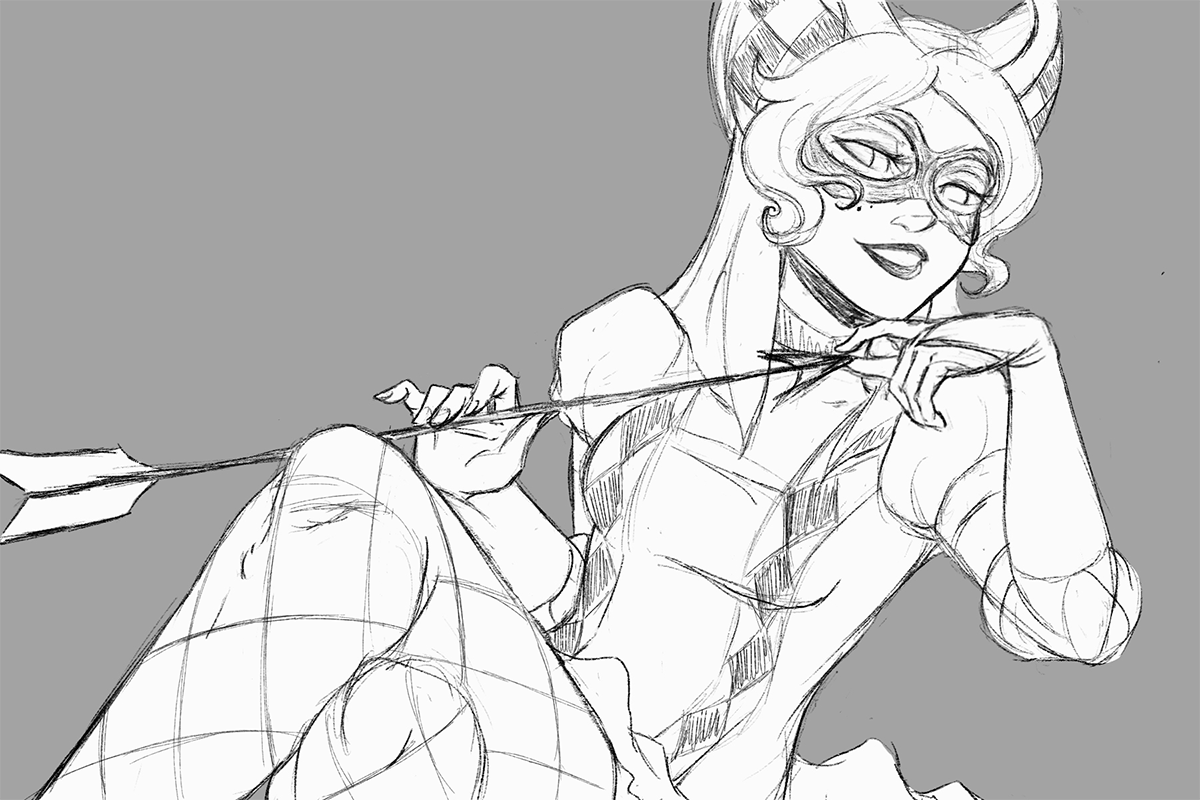
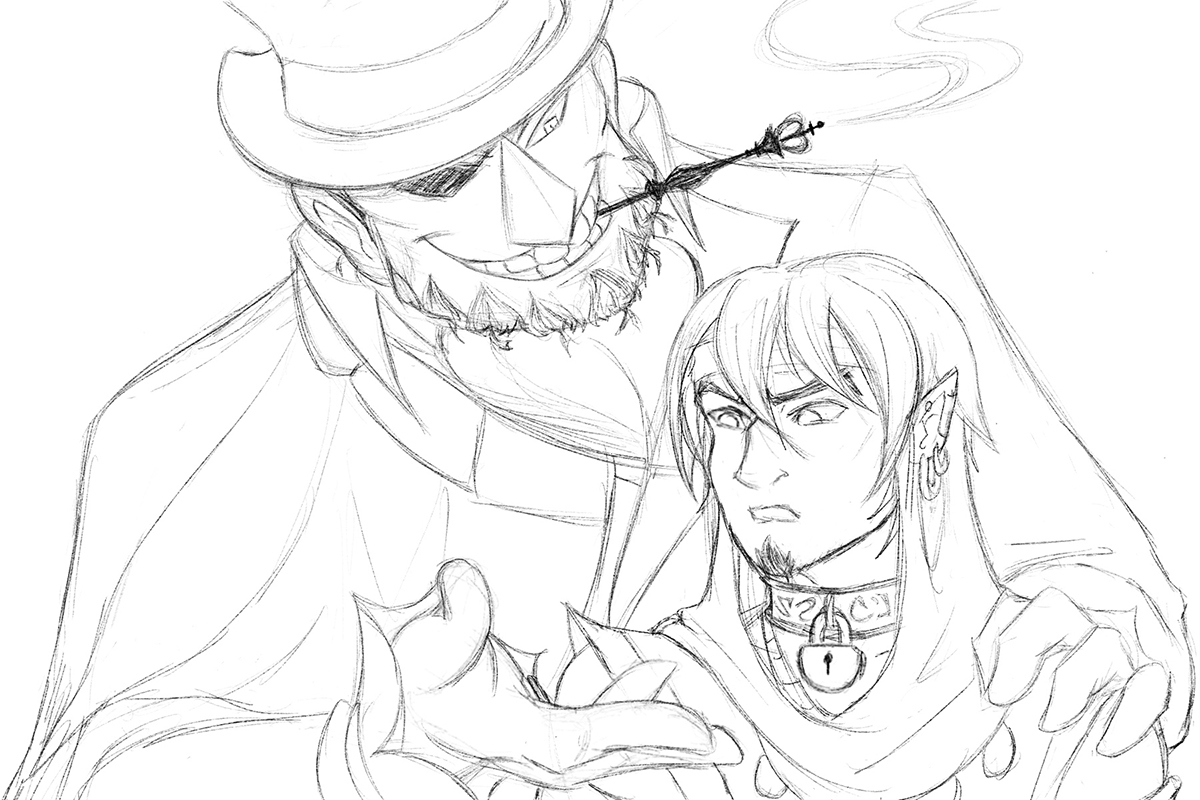
Additional sketches that didn't make it to the final publication.
Sketch Process Video
A Procreate video export of my drawing process for a scene from Episode 1.
Audio
I knew a full-cast audio production would add a whole new dimension to the novel, and bring it closer to the feeling of an animated cartoon. To pull it off, I would need voice talent, music, sound effects, and audio engineering.
Voice Talent
My voice talent came from three general sources.
First, I tackled the overall narration myself, as I knew the subject matter best and could also make adjustments to the prose if I needed certain sections to flow more comfortably.
Most of the characters' voices were provided by friends excited by the project, either at my request or volunteering themselves. Some sent me recordings they'd made with their own equipment, and others came by my in-home studio to record with me.
For the rest of the characters, I hired voice talent through various channels. I reached out to content creators on Youtube, contracted performers through Fiverr, and posted listings on Casting Call Club. At this point, I'd had several years of experience commissioning visual artists for one-off art commissions, but this was an exciting new frontier for me. I was fortunate to have only good experiences, and met lots of phenomenal creators in the process.
Music and Sound Effects
I used free sound effects from SoundBible and freeSFX. My good friend, Anne Werner, composed many of the transitions used throughout the audio. I licensed the music I used for leitmotifs from FreePlay and Premium Beats. Sam Dillard composed a custom theme song for Loose Canon, which I used as the opening for each episode.
Loose Canon Theme
Loose Canon Theme, composed by Sam Dillard. The cover image is a collaboration between myself and digital artist Porforever.
Audio Engineering
With audio from so many sources, editing them together was a monumental undertaking. I was quite new to the world of audio engineering and learned a ton in the process. I repaired plosives, corrected for background noise, equalized volumes, compressed and amplified where needed, and fine-tuned timing. Music needed to be faded in and out, and even rearranged in spots. Some characters had special effects applied to their voices. I later hired on a more experienced audio engineer, Sam Williams, to speed up the production time.
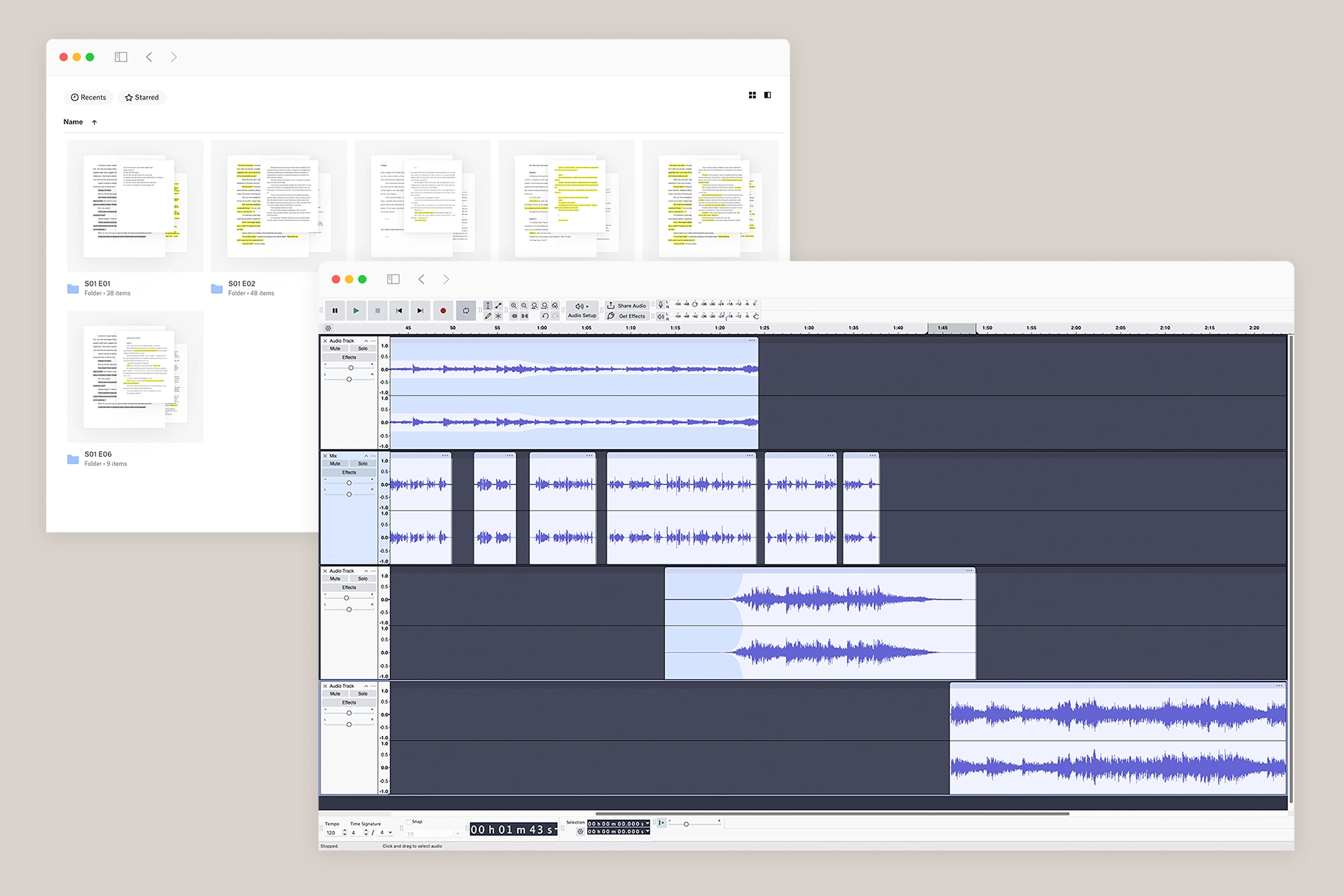
Screenshots showing part of the audio creation process. The upper left window shows my files, containing the highlighted scripts, voice talent recordings, and working files for the mixdowns. The bottom right is my Audacity workspace, showing a completed segment that features one voice track and three music tracks.
Website
I investigated existing platforms to use as a home for Loose Canon, but decided it was important to me to be able to customize every aspect of the storytelling experience. I built the site with a self-hosted WordPress using a customized Divi theme.
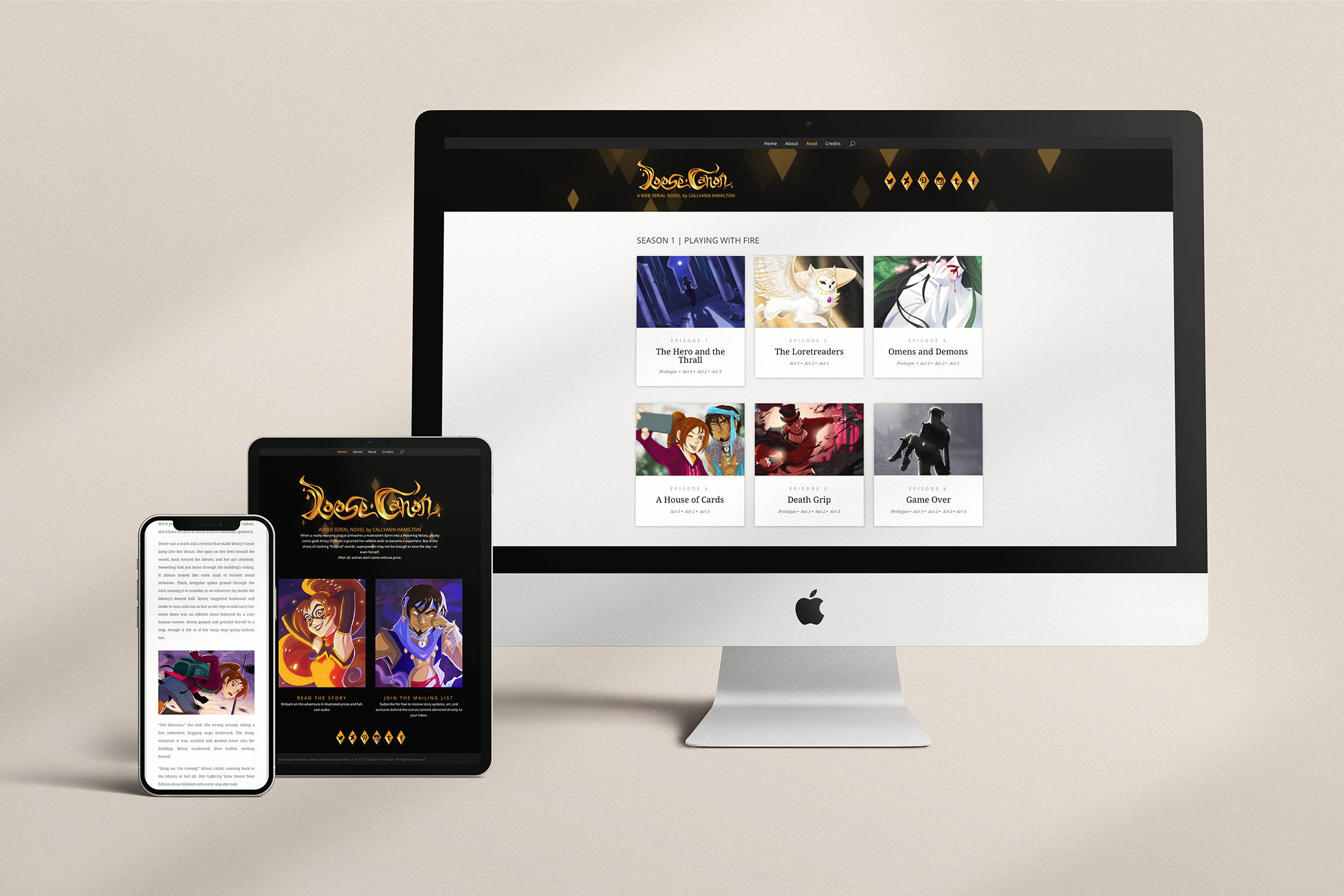
Desktop view of the episode selection page, tablet view of the homepage, and mobile view of one of the episodes.
Logo
Full Render
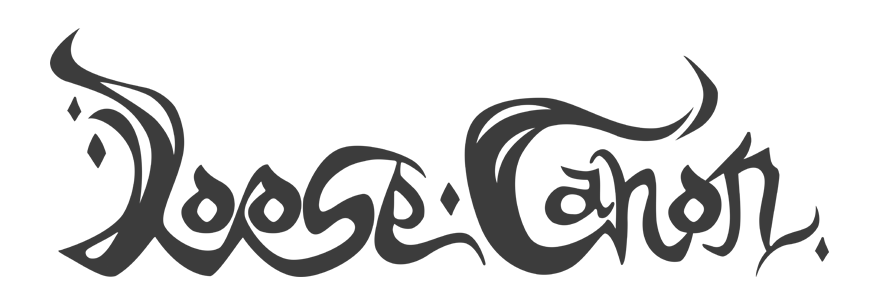
Graphic
The Loose Canon logo was inspired by a combination of smoke, Arabic calligraphy, and gold-foiled book titles. I contracted two artists to help me realize my concept; graphic designer Jehonathan Chanutomo, who helped me refine the shape language, and illustrator Anya McNaughton, who painted the metal texture. I did the final graphic shape and color editing.
Color Palette
Typography
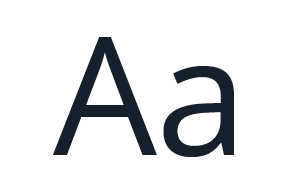
[Sans]
Open Sans
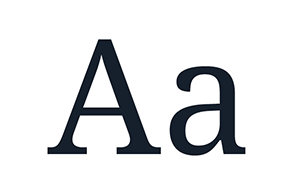
[Serif]
Droid Serif
Visual motifs
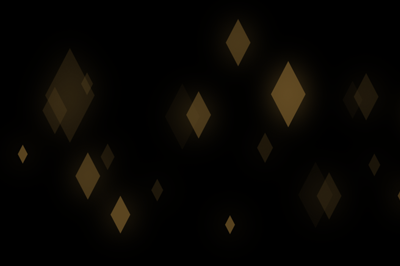
The diamond motif appears in the bokeh-style background image, the episode dingbats, and the social media icons.
Publication and Marketing
Mailing List and Social Media
Loose Canon updates were published serially over several months. I communicated with readers through a digital mailing list that I operated through Mailchimp. I personally designed the emails and managed the sends. In addition, I posted frequently to social media to share updates, behind-the-scenes info, art, commissions, and fan content created by readers. Below is a showcase of just some of the Loose Canon content created beyond the story itself.
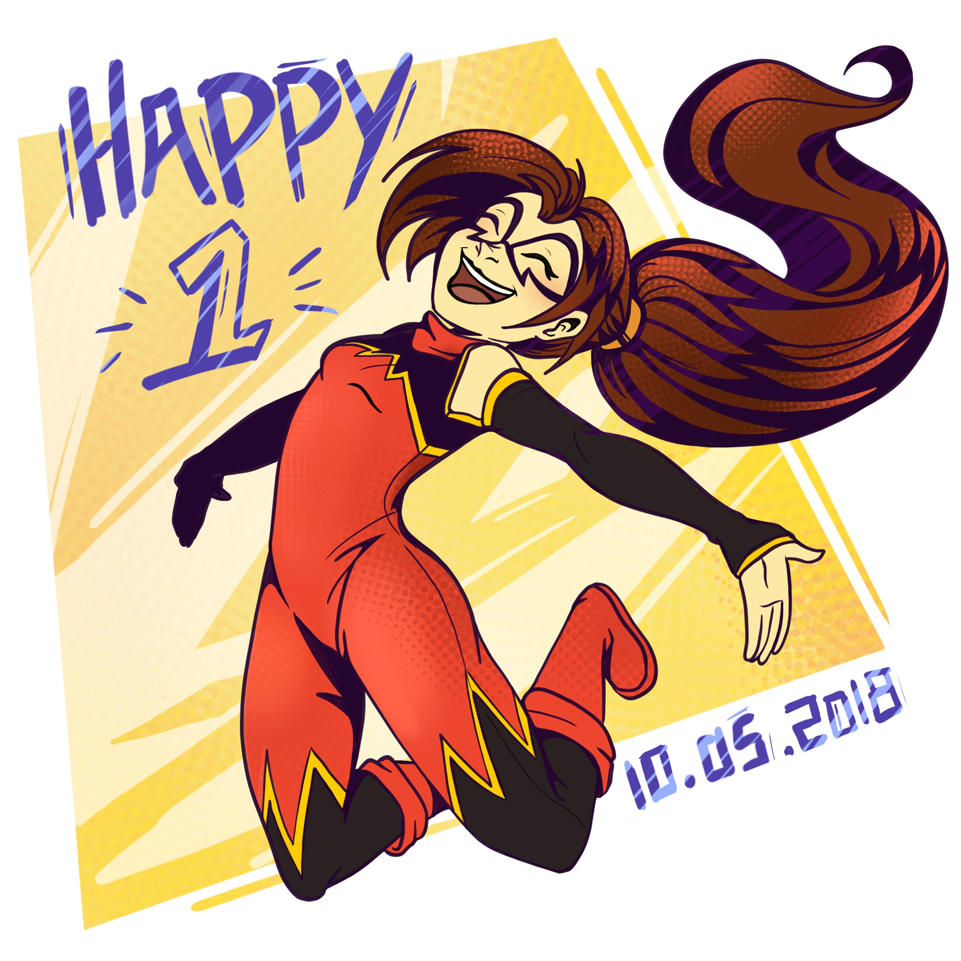
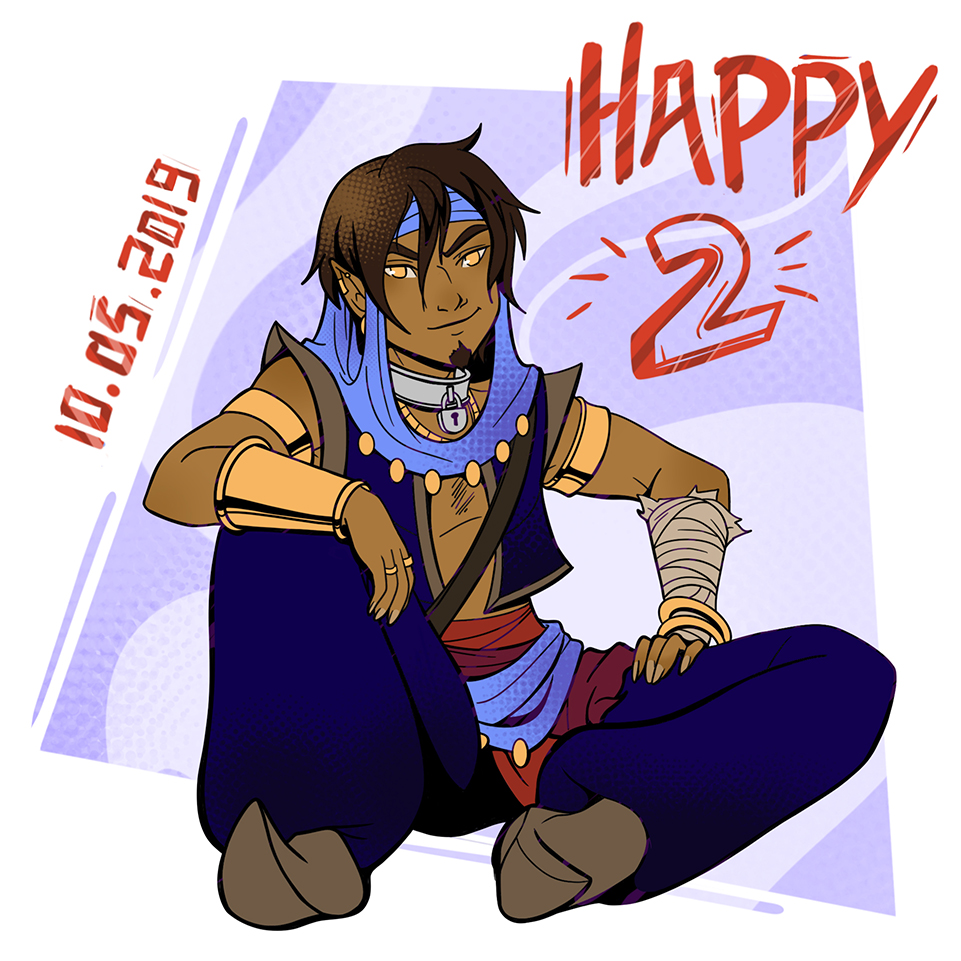
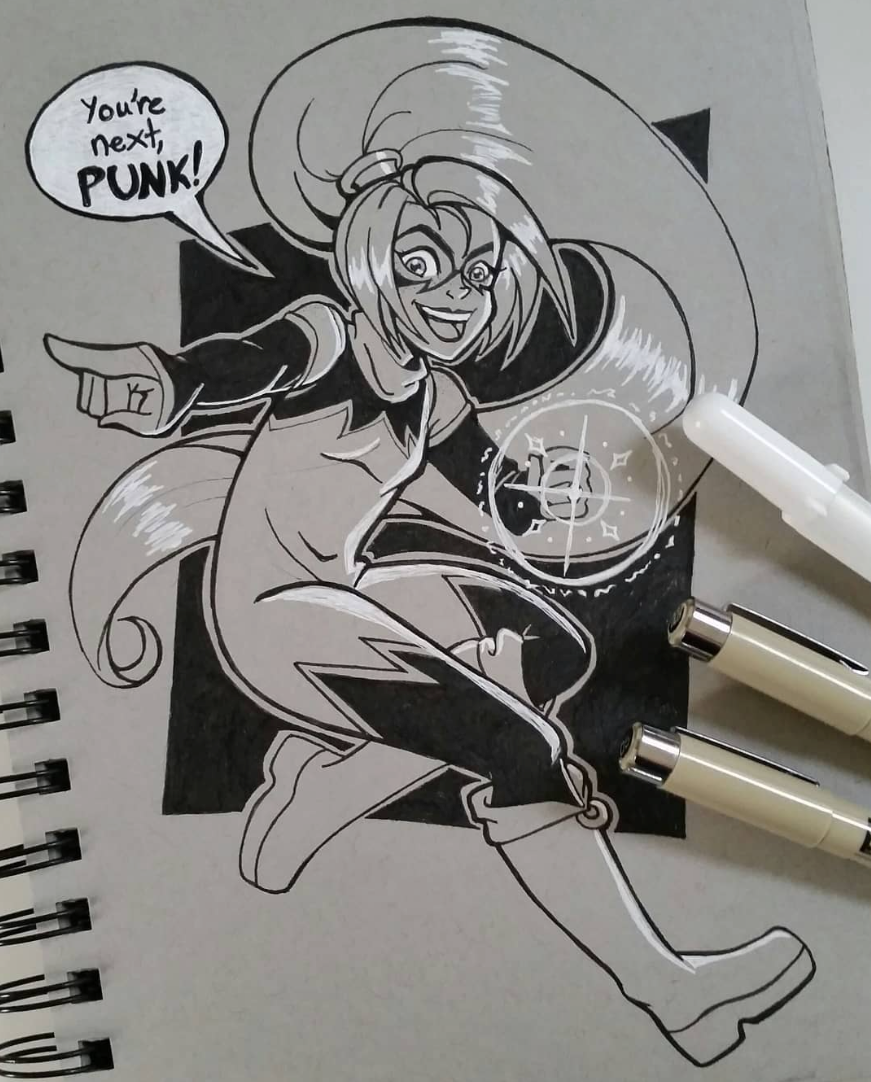
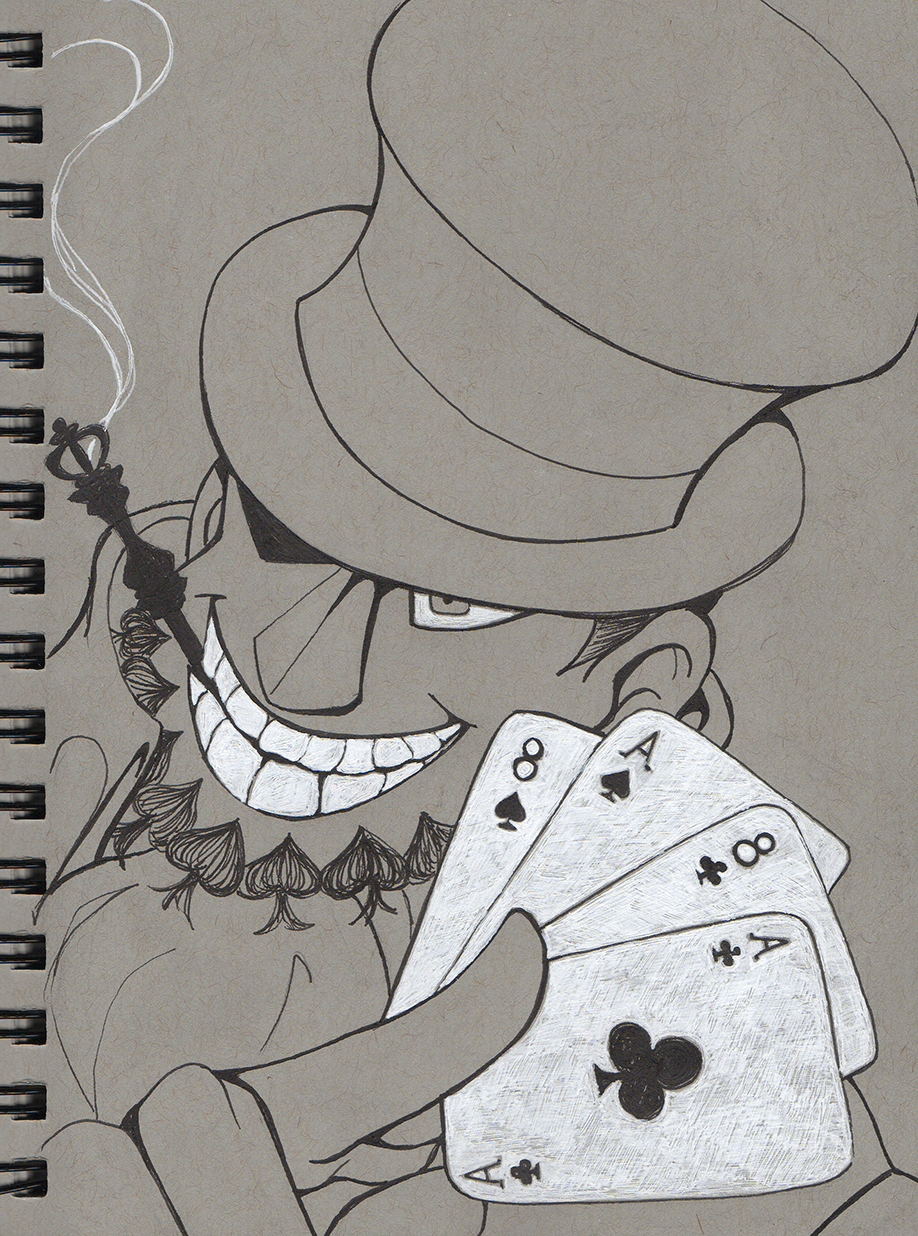
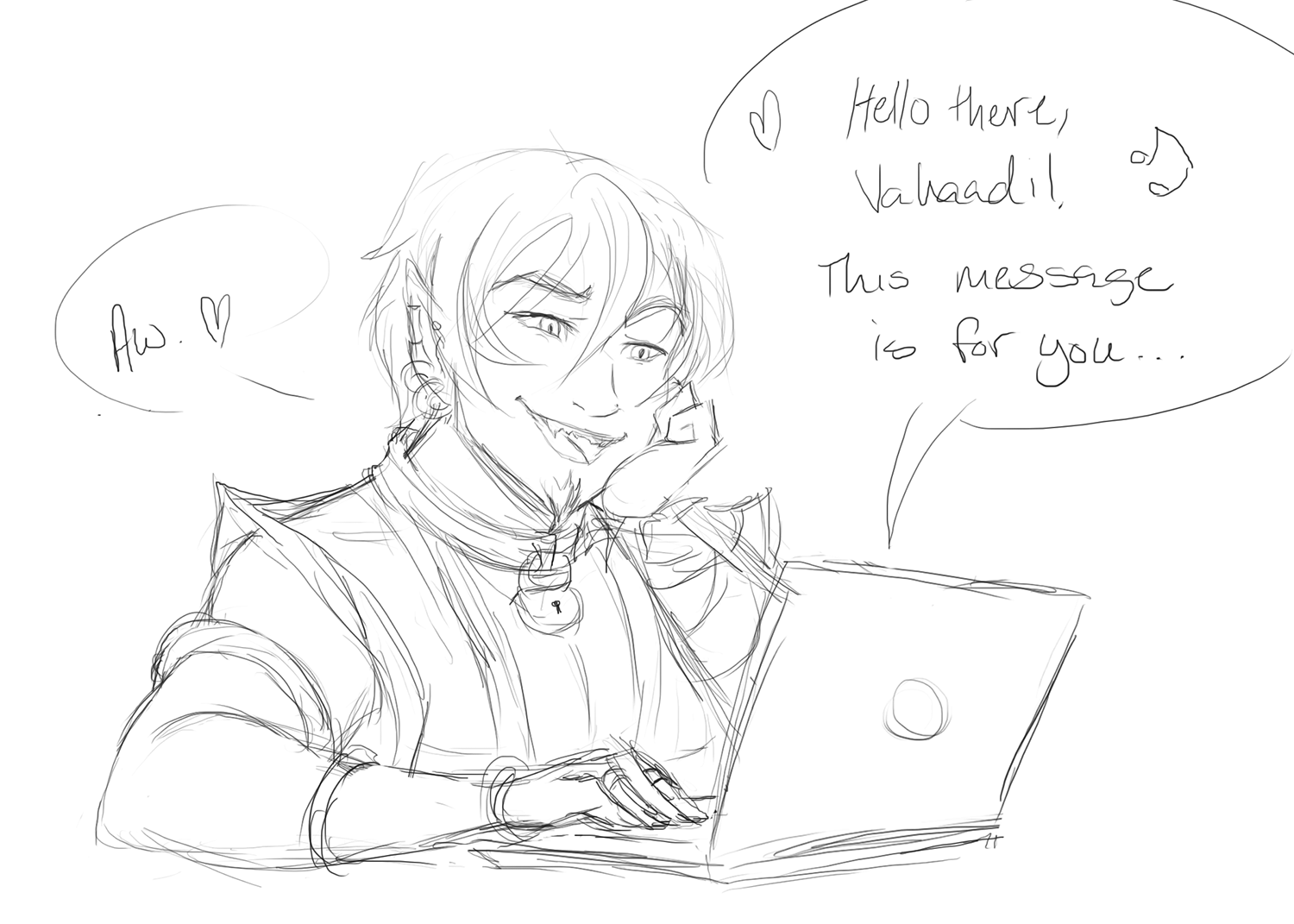
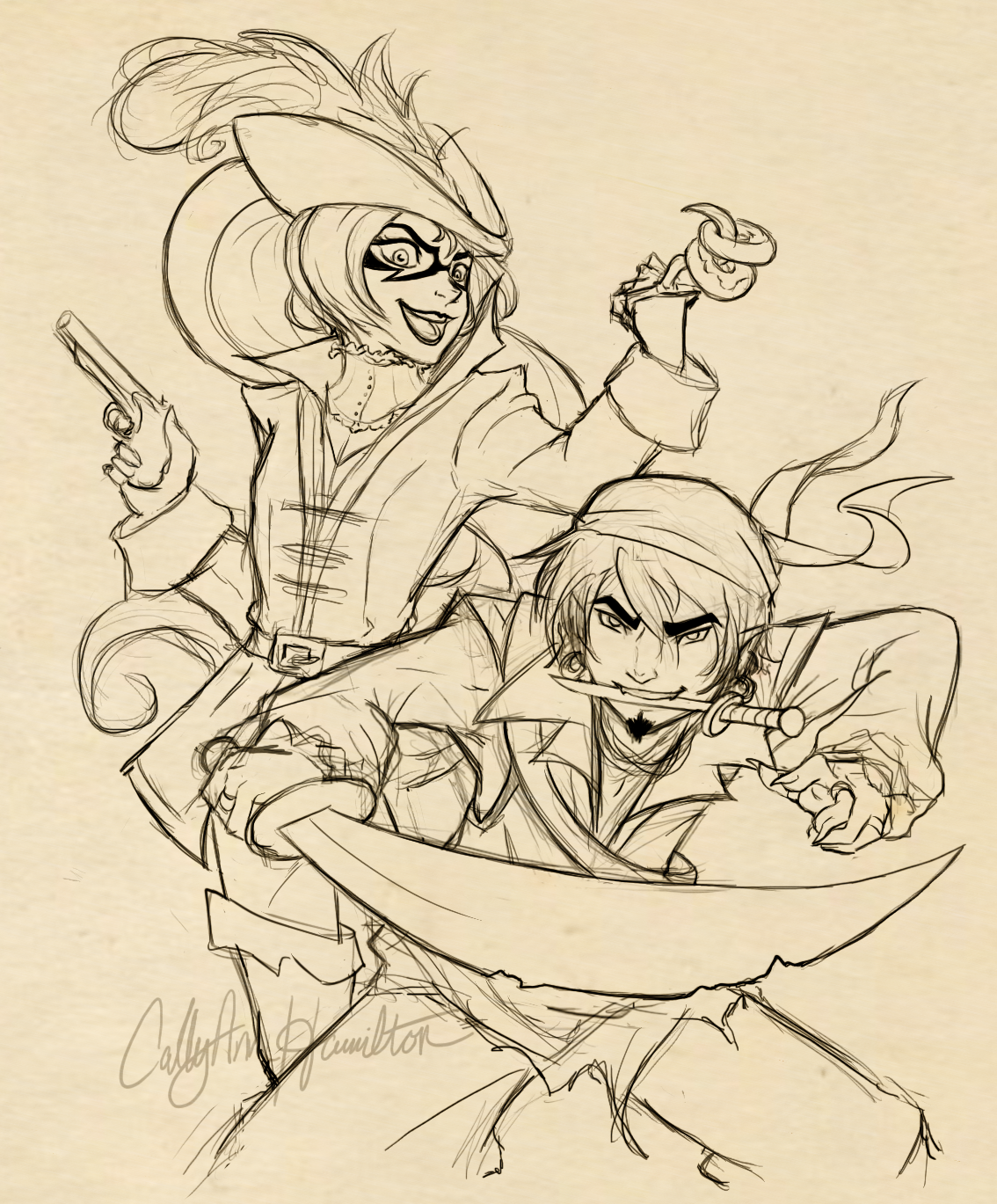
Illustrations shared with readers to celebrate various events. One and two: Spark and Vahaadi celebrate the first and second anniversaries of Loose Canon's launch. Three and Four: Spark and Mr. Sabo drawn in micron and white gel pen for Inktober. Five: Vahaadi responds to a sweet message from a fan. Six: Spark and Vahaadi dressed as pirates for Talk Like a Pirate Day.
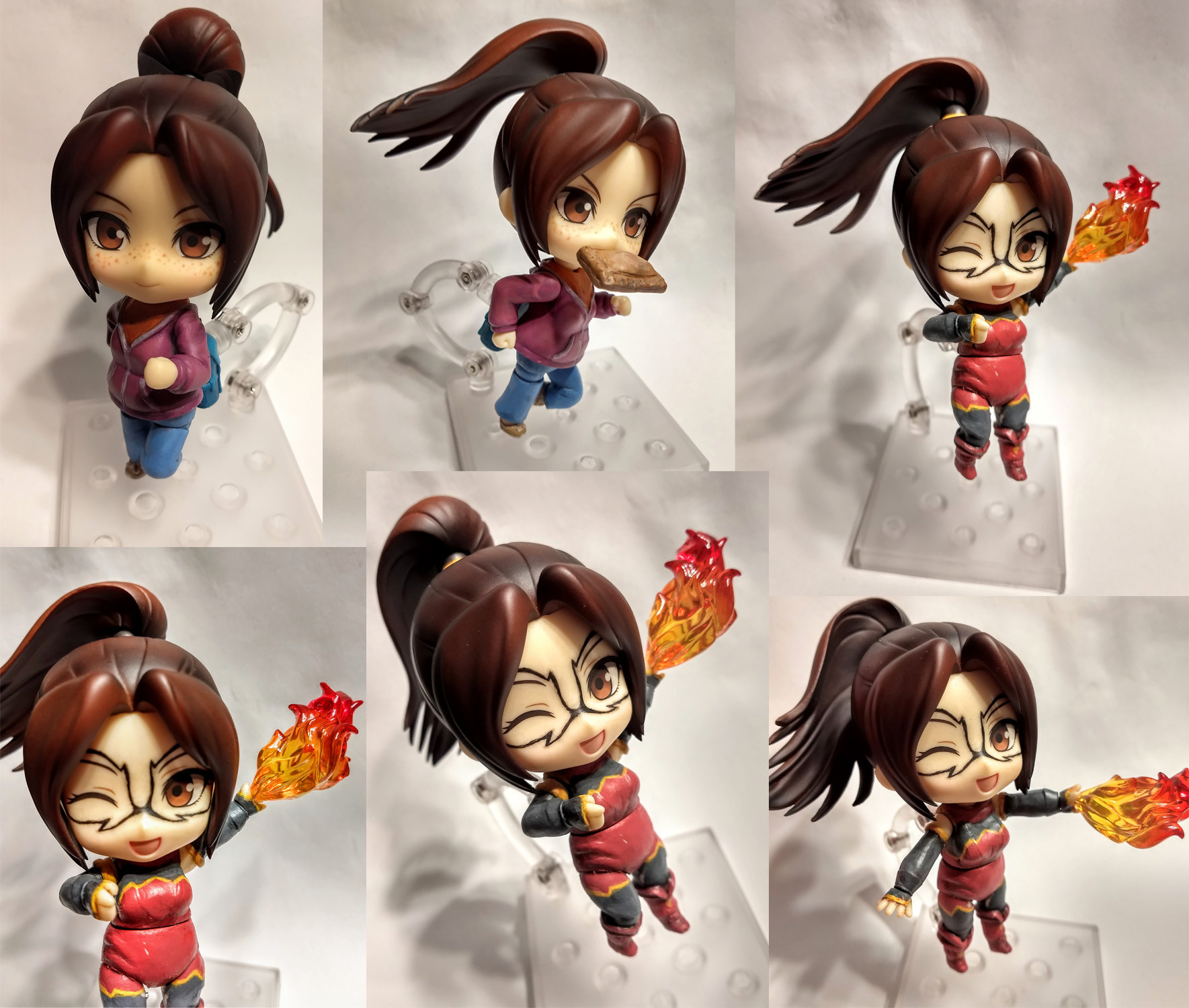
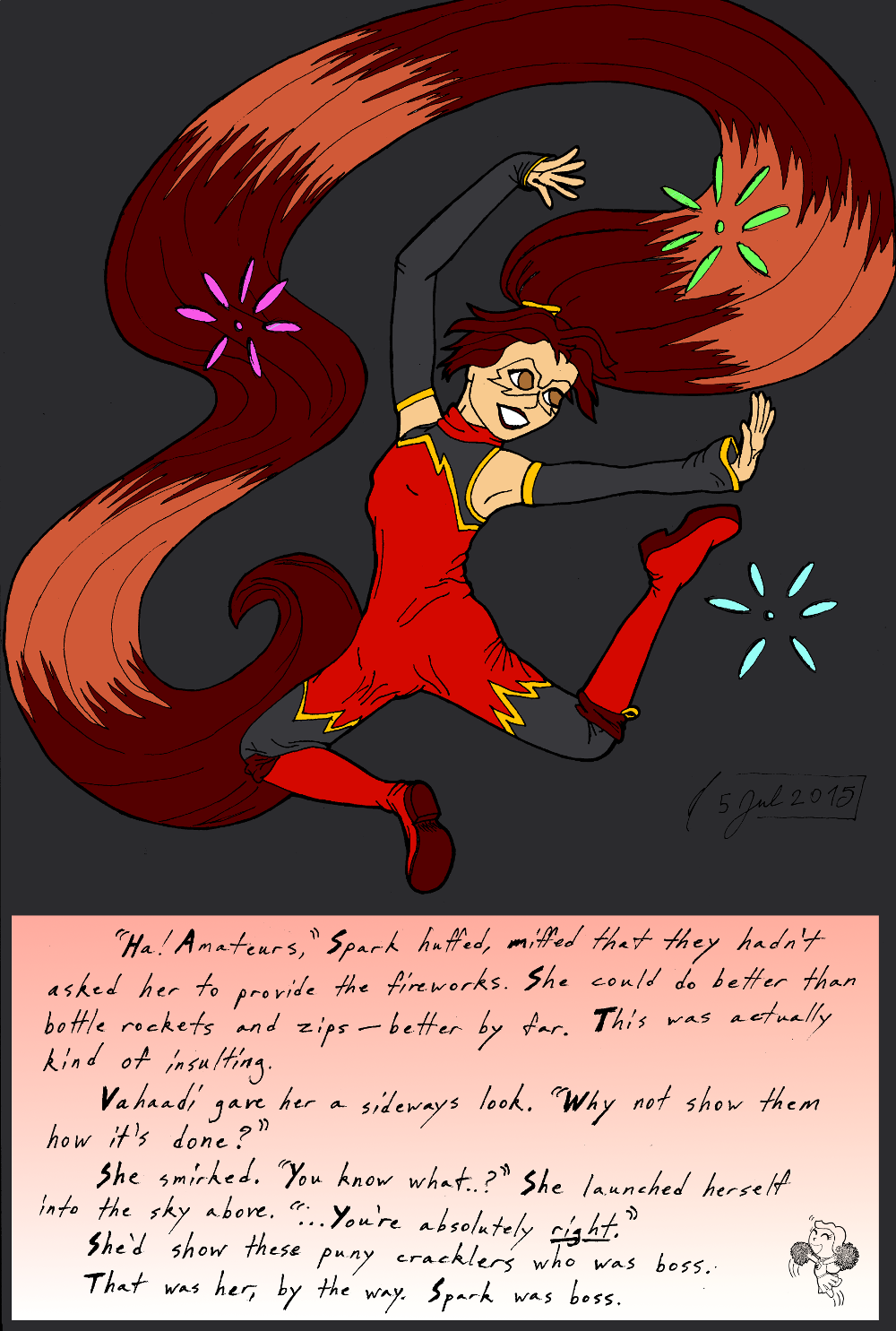
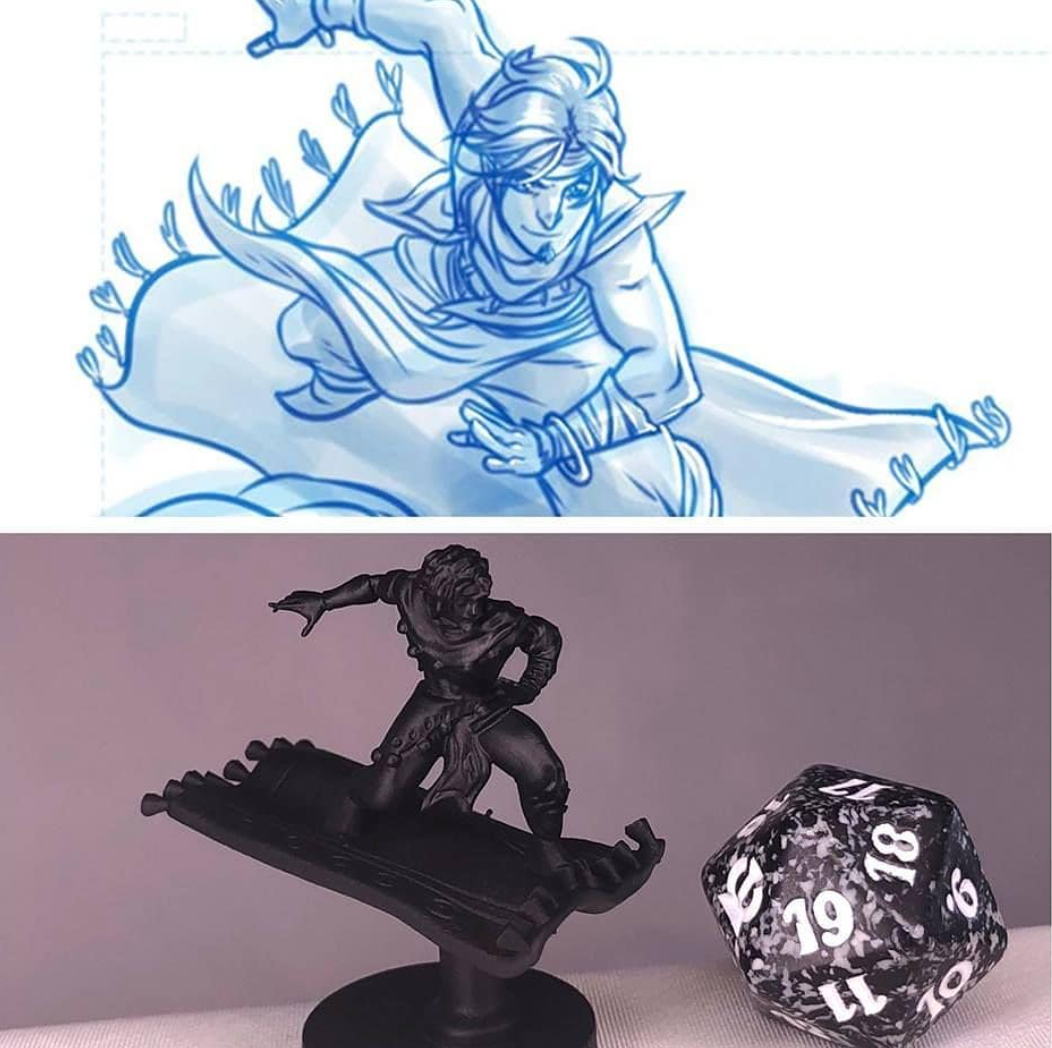
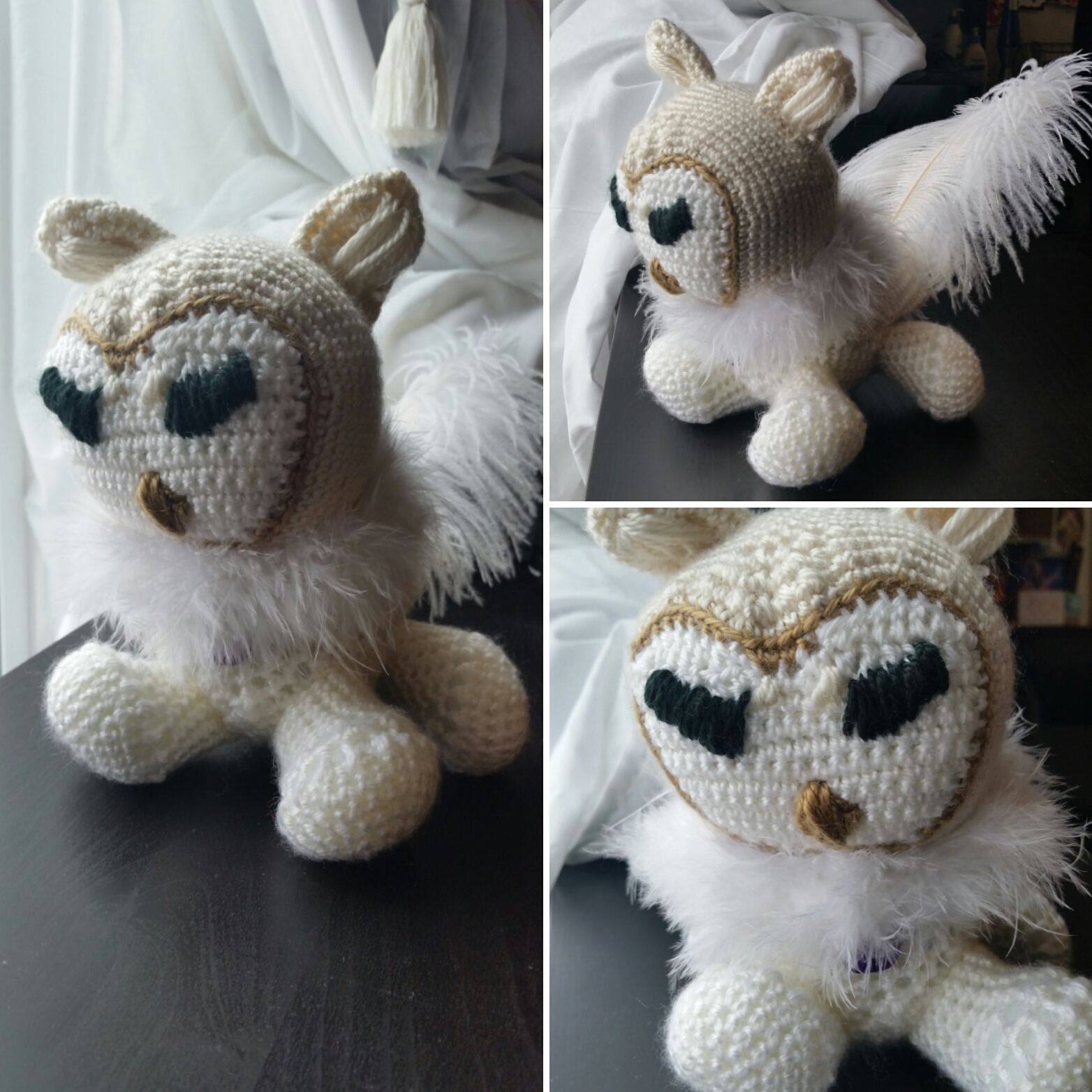
Gift art created by supporters. One: Custom sculpted nendoroid figurine by Brandie Fettig. Two: Illustration and mini-fic by ArynChris. Three: 3D print of Vahaadi by Ty Dean, based on a commission by FooRay. Four: A crocheted plush of Elweyn by Kristina Kugler.
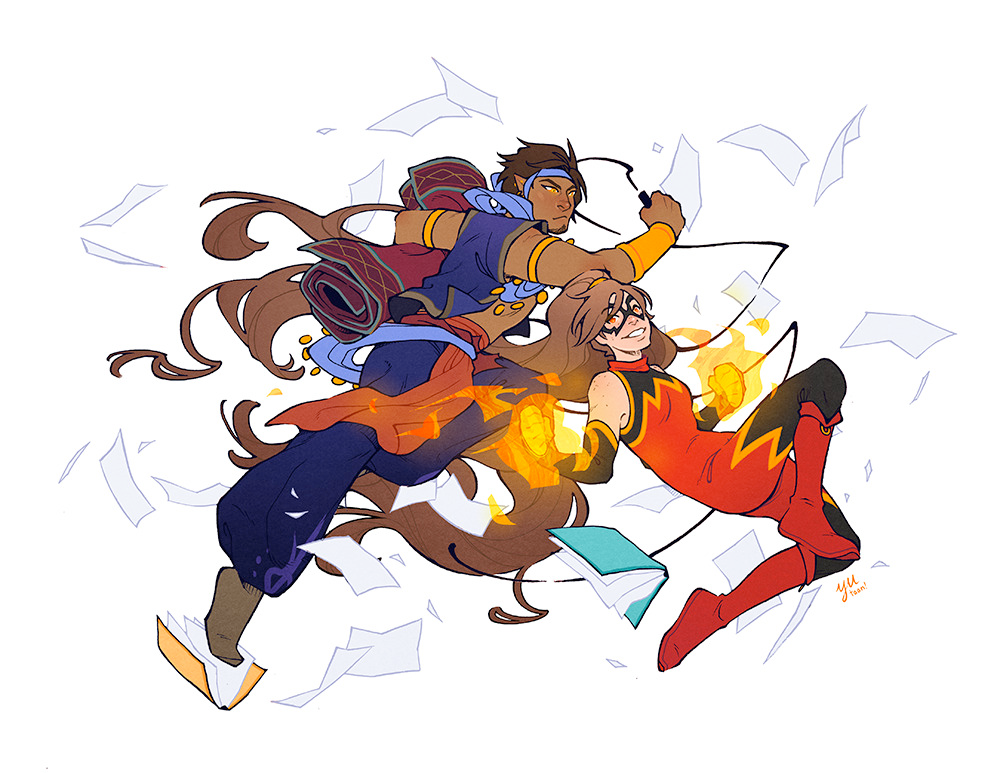
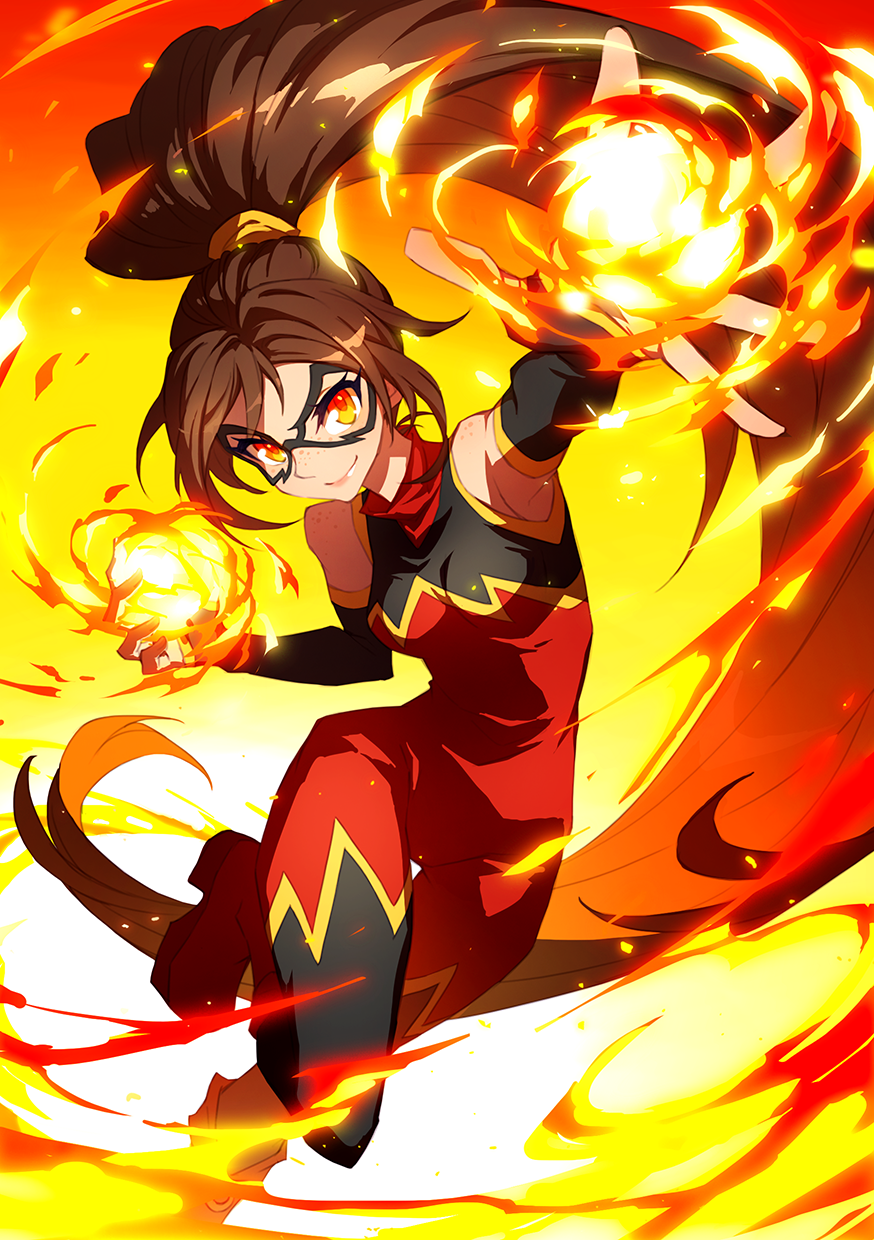
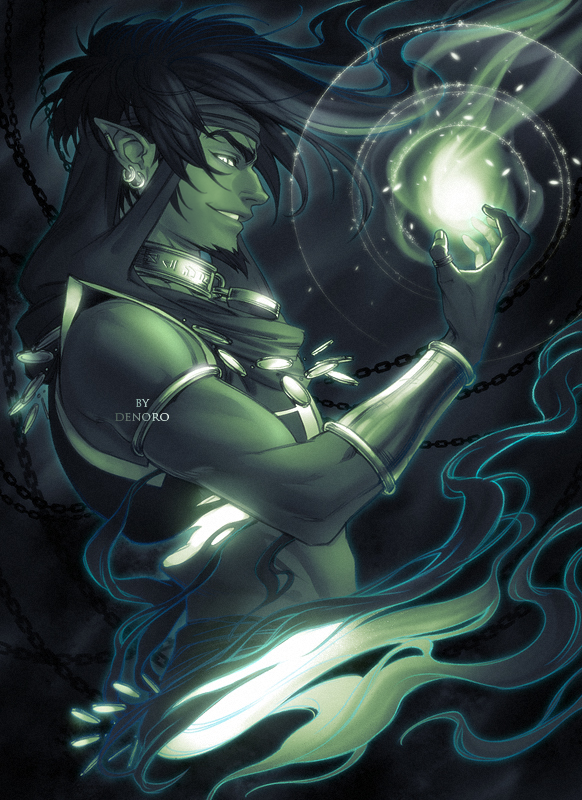
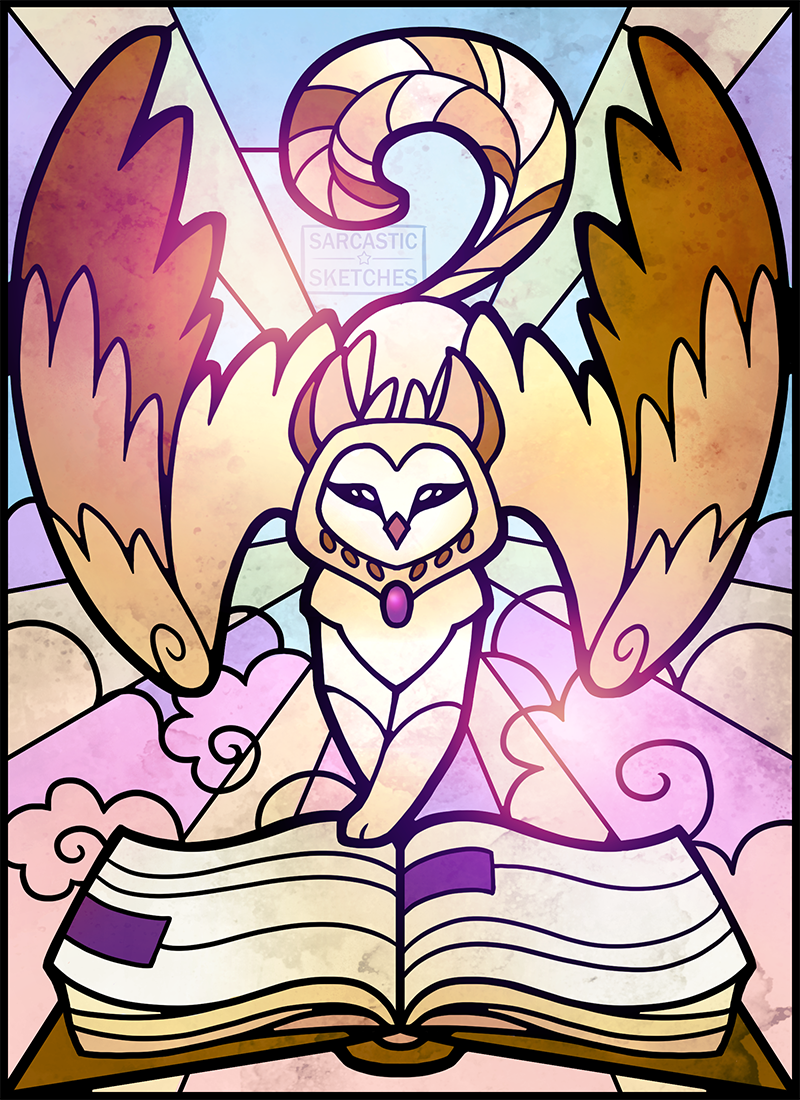
A selection of commissions featuring the characters of Loose Canon. One: Spark and Vahaadi by Yutaan. Two: Spark by DarkH. Three: Vahaadi by Denoro. Four: Elweyn by Sarcastic Sketches.
Print Collateral
Between 2018-2023, I operated a small business selling my artwork at pop culture conventions around the Unites States (you can learn more about CallyAnn Creates LLC here). I offered prints of illustrations from Loose Canon and handed out business cards promoting the free web novel.
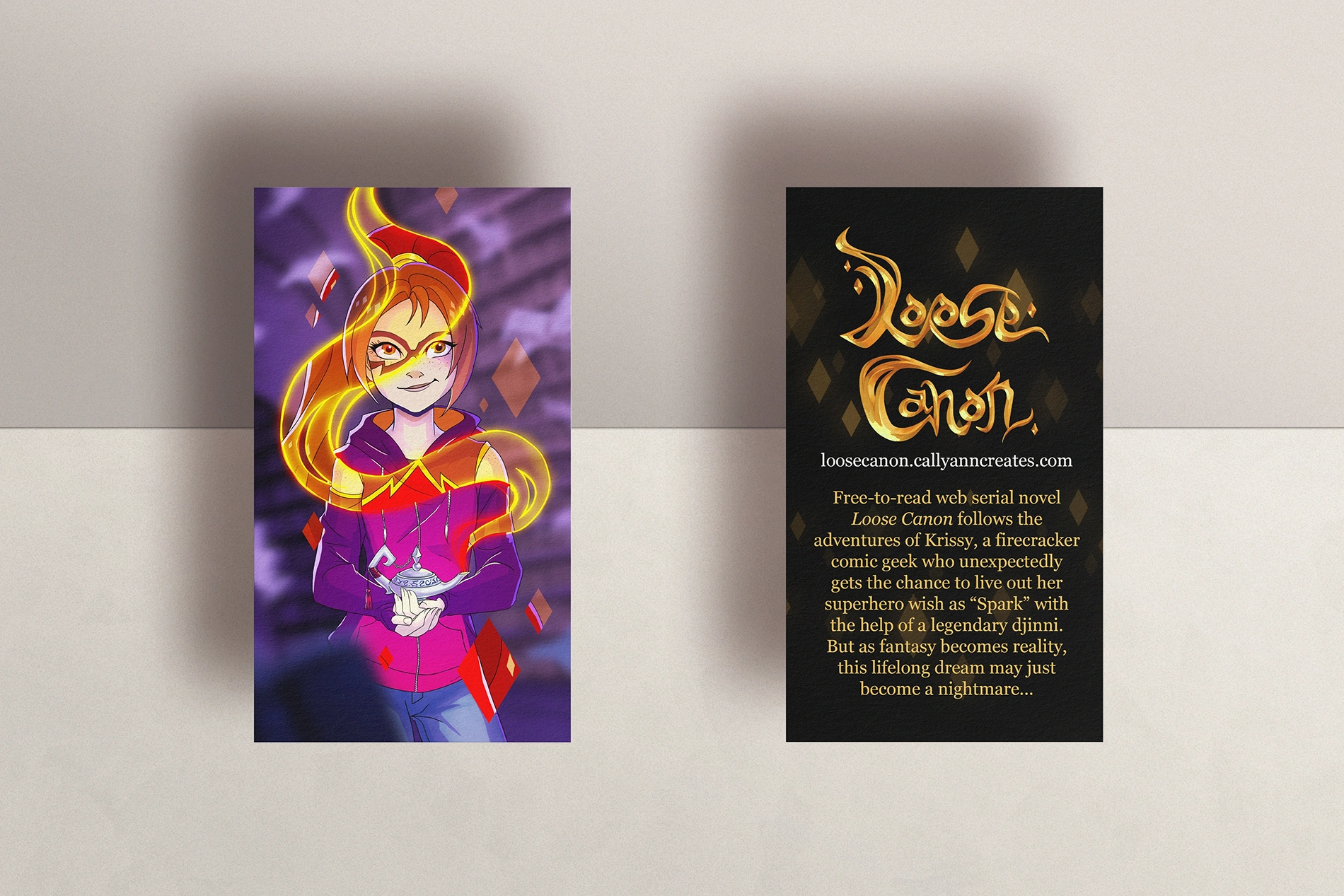
Business card front and back.
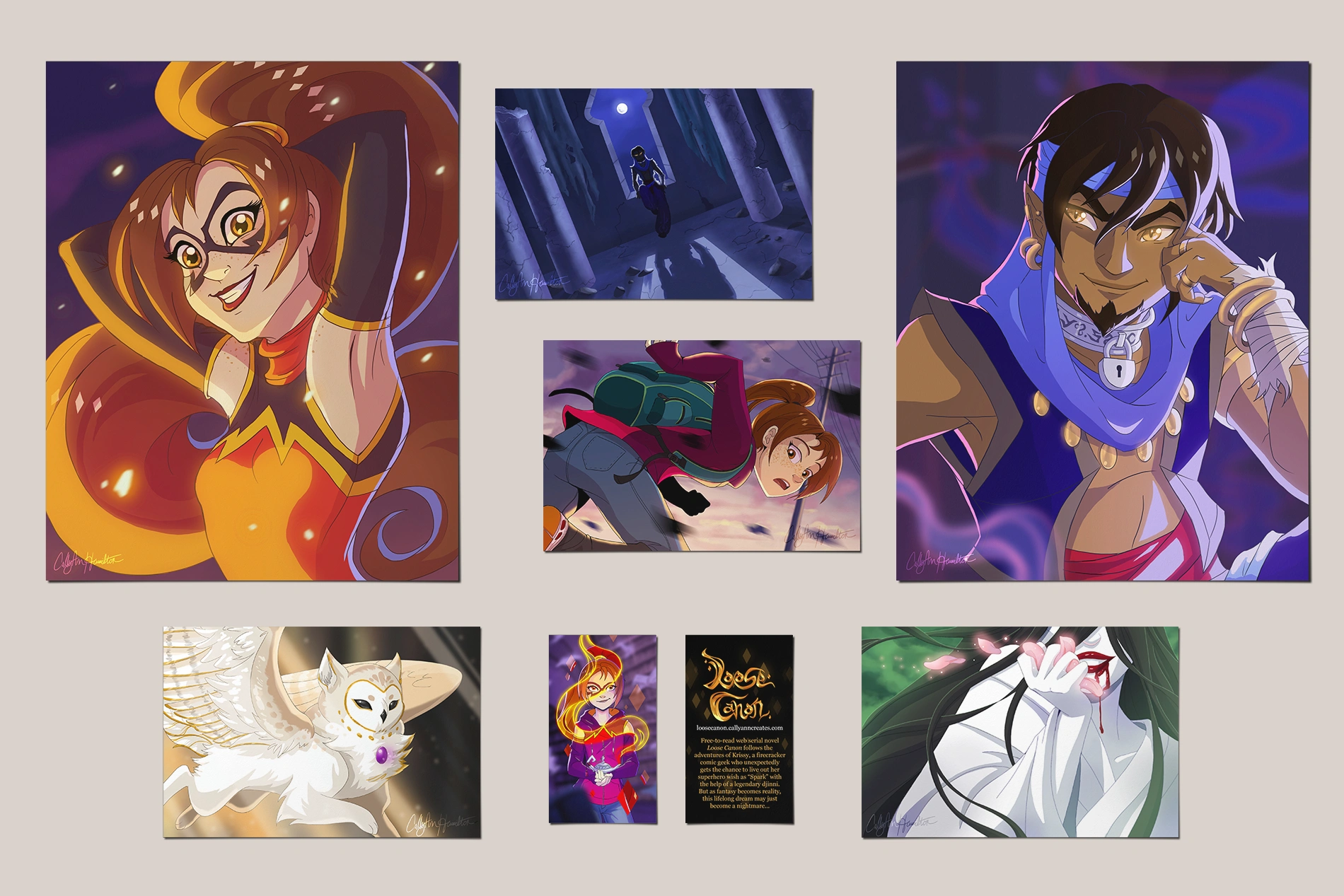
Prints and business cards.